

Apr 16, 2026 |BAKTH
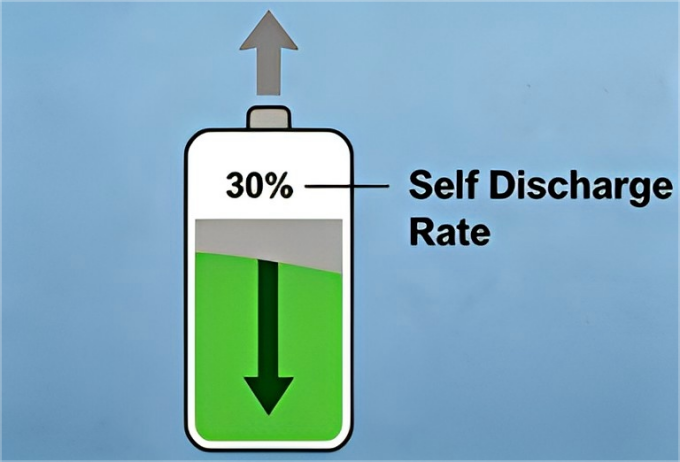
Battery self-discharge means a battery loses power slowly when you don’t use it. It is very important to know this. It helps you store batteries well. It also makes batteries last longer and work better.
This article will tell you about self-discharge in easy words. It will show you how fast different batteries lose power. It will also tell you how to calculate it and how to stop losing too much power.
Self-discharge is when a battery loses power over time. This happens even if the battery is off. It also happens if the battery is not connected to any device. All batteries do this naturally.
Batteries have small chemical reactions inside. These reactions happen even when you don’t use the battery. They use up power slowly.
Different batteries lose power at different speeds:
| Battery Type | Rechargeable | Self-Discharge Speed |
|---|---|---|
| Lithium Metal | No | Can store for about 10 years |
| Alkaline | No | Can store for about 5 years |
| Zinc-Carbon | No | Can store for 2–3 years |
| Lithium Thionyl Chloride | No | Loses about 1% per year |
| Lithium-ion | Yes | Loses 2%–4% per month |
| Lithium Polymer | Yes | Loses about 5% per month |
| Low Self-Discharge NiMH | Yes | Loses only 0.25% per month |
| Lead-Acid | Yes | Loses 4%–6% per month |
| NiCd | Yes | Loses 15%–20% per month |
| Normal NiMH | Yes | Loses about 30% per month |
Use this simple formula:
Self-Discharge Rate (%) = (Original Power − Left Power) ÷ Original Power × 100
Example:
A 100Ah battery has 96Ah left after one month.
Self-discharge rate = (100 − 96) ÷ 100 × 100 = 4%
Self-discharge is normal for all batteries. By storing them properly and maintaining them well, you can reduce power loss and make batteries last much longer.


 Hotline
 Email
Email
 Address
RM 2201, Longshenghengbo Center, Jianshe East Road and Bulong Road Intersection, Longhua District, Shenzhen, Guangdong, China
B13 Bldg, Lihe Zijing Science and Technology Innovation Center Headquarters, No. 55, Qinghu East Road, Qingxi Town, Dongguan City, Guangdong Province, P.R. China


 Previous