

Dec 04, 2025 |BAKTH
The Challenge:
A manufacturer specializing in small to medium-sized drones for industrial inspection and cinematic aerial photography faced a core bottleneck in developing their next-generation model. They required a battery that achieved the optimal balance between lightweight design, sustained high-power output, and safety & reliability. Existing batteries either suffered from significant voltage sag during hovering and acceleration, compromising flight stability and video transmission quality, or lacked the energy density to meet mission requirements exceeding 20 minutes per flight.
Our Solution:
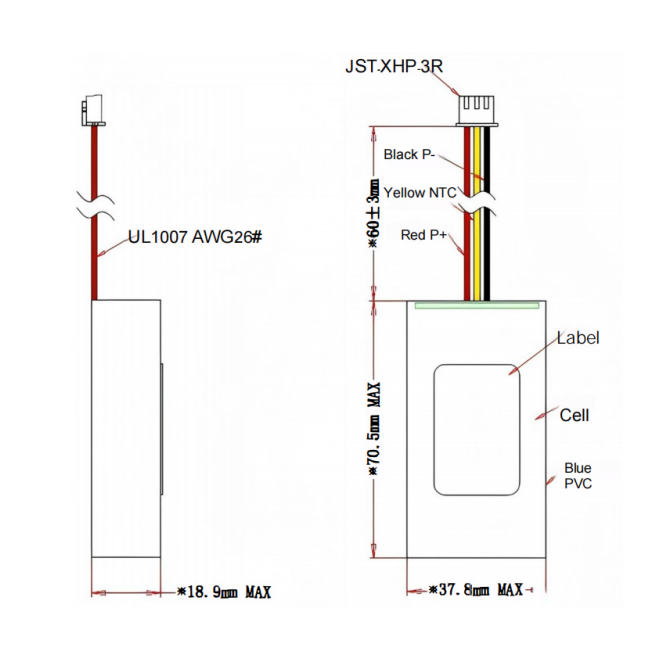
The 18650CA-2S-3J Li-ion Battery Pack, with its meticulously designed architecture, emerged as the ideal solution to this challenge.
Intelligent 2S Configuration: The 2-series connection delivers a stable 7.4V nominal voltage with a substantial 2250mAh capacity, perfectly matching mainstream drone propulsion systems. This design strikes an engineering-optimal balance between discharge capability and energy reserve.
Power-Oriented 18650 Cells: Utilizes high-rate power cells with extremely low internal resistance. They effortlessly handle the sudden high-current demands during drone ascent and acceleration, effectively minimizing voltage “sag” and ensuring ultra-stable power for both the flight controller and gimbal camera systems.
Comprehensive Smart Protection: Features a built-in industrial-grade Battery Management System (BMS). Beyond standard protection against overcharge, over-discharge, overcurrent, and short circuits, it includes cell balancing functionality. This ensures synchronized aging of the two series-connected cell groups, maximizing the overall pack lifespan and safety.
Rugged yet Lightweight Design: The compact and robust structural design, with a scratch-resistant and shock-absorbent casing, is engineered to minimize weight. This contributes directly to improving the drone’s thrust-to-weight ratio and handling agility.


 Hotline
 Email
Email
 Address
RM 2201, Longshenghengbo Center, Jianshe East Road and Bulong Road Intersection, Longhua District, Shenzhen, Guangdong, China
B13 Bldg, Lihe Zijing Science and Technology Innovation Center Headquarters, No. 55, Qinghu East Road, Qingxi Town, Dongguan City, Guangdong Province, P.R. China


 Previous