

Oct 24, 2025 |BAKTH
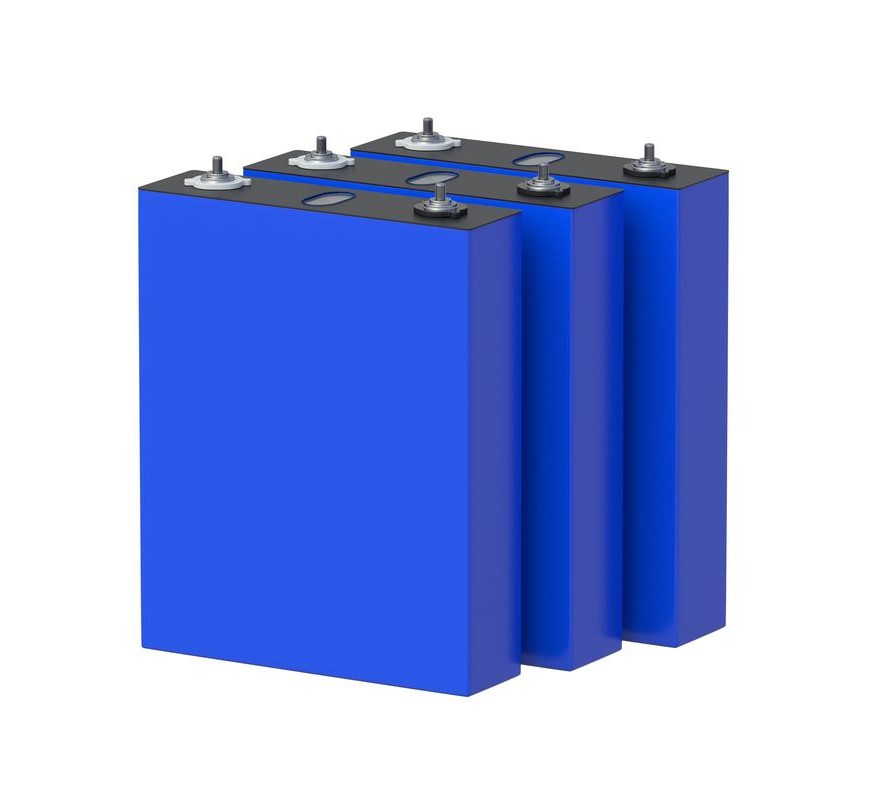
Traditional LFP, limited by a compaction density (≤2.50g/cm³), generally faced a fast-charging bottleneck at 2C . Through innovations in particle gradation and sintering processes, the new generation of high-density products has pushed the density to over 2.60–2.65g/cm³, bringing about three major breakthroughs .
The leap in energy density is the most direct achievement. CATL's Shenxing PLUS battery system has broken the 205Wh/kg energy density barrier, enabling a range of over 1000 kilometers, now comparable to ternary batteries .
A qualitative change in fast-charging performance has been realized. High-density LFP can achieve 4C-6C super-fast charging, replenishing 600 kilometers of range in 10 minutes . Wan Fuxin, Director of Shandong Fengyuan Lithium Energy, confirmed this technical specification at a recent industry conference .
Discharge capacity has also improved simultaneously. The discharge specific capacity of BYD's second-generation Blade Battery reaches 145-159mAh/g, indicating significantly improved utilization of active materials .
Behind this lies precision process control at the nanoscale. Hunan Yuneng, by optimizing particle size distribution, ensures "every nano-particle sits in the right place"; Longpan Technology's S501 product, utilizing element doping and special sintering processes, locks the powder compaction density at 2.65g/cm³ .
Looking at the technological iteration path, LFP materials can be divided into five generations based on powder compaction density .
The first generation, with a compaction density of 2.1-2.3g/cm³, is now largely obsolete; the second generation (2.4-2.5g/cm³) and the third generation (2.5-2.6g/cm³) are the current mainstream products in the market .
The fourth generation has a compaction density of 2.6-2.7g/cm³; the fifth generation reaches over 2.7g/cm³ . The industry typically defines LFP with a compaction density of 2.6g/cm³ and above as high compaction density products .
To date, numerous LFP manufacturers including Fulincheng Gong, Defang Nano, Hunan Yuneng, Longpan Technology, Wanrun New Energy, and Anda Technology have all deployed high-density LFP products, but with significant differences in technical capabilities and production capacity supply .
Most companies are currently in the fourth-generation product phase . Defang Nano has successfully developed a fifth-generation high-performance LFP material with a powder compaction density of 2.70~2.75g/cm³, suitable for both power and energy storage applications, and it has now entered the pilot-scale mass production stage .
High-density LFP will encounter a demand "singularity" in 2025 .
The comprehensive switch in power batteries is the main driver. CATL aims to increase the share of its Shenxing battery to 50%-60% of its LFP products, while BYD's second-generation Blade Battery application rate exceeds 20% .
The adoption in large energy storage cells further expands market demand. Demand for 314Ah energy storage cells is surging, with the penetration rate of high-density materials in energy storage already exceeding 30% in 2024 .
Industry chain calculations estimate that the total demand for high-density LFP will reach 800,000 tons in 2025—equivalent to one-fifth of the industry's total production capacity! However, the current effective supply is less than 300,000 tons .
More severe is the supply-demand mismatch: the top three industry players (CR3 - Hunan Yuneng, Fulincheng Gong, Longpan Technology) monopolize 90% of high-end production capacity . Fulincheng Gong has only 250,000 tons of capacity planned for 2025, yet it exclusively supplies CATL's Shenxing battery .
Although Hunan Yuneng has put a 200,000-ton dedicated line into production in Yunnan, it still struggles to cover the 600,000-ton incremental demand from energy storage .
The "double-sintering process" has become a watershed . Traditional single-sintering methods result in uneven particle distribution and high impurity phase rates when producing high-density products, whereas double-sintering achieves particle homogenization through precise control of temperature and atmosphere—but at the cost of a 30%-40% loss in production capacity .
This directly leads to high barriers: leading enterprises can digest defective products (downgraded to 2nd/3rd gen products) thanks to large orders, while small and medium-sized manufacturers find the yield cost difficult to bear .
Process technologies are diversifying. Fulincheng Gong's oxalate iron route achieves a mass production density of 2.7g/cm³, Defang Nano's liquid phase method overcomes carbon coating challenges, and Longpan Technology's "single-sintering" S526 reduces energy consumption .
The profit scissors gap is widening further. The price premium for high-density products reaches 3000 RMB per ton; the price difference between Jiangxi Shenghua and second-tier manufacturers has shifted from a 500 RMB discount to a 2500 RMB premium .
The market has entered an "oligarch verification" stage: CATL has tied up with Fulincheng Gong by signing long-term agreements for 2025-2029; Wanrun New Energy secured a 1.32-million-ton LFP order from CATL; Hunan Yuneng is striving to increase the proportion of high-end products to 60% .
As multiple governments shift their economic policy focus towards promoting industrial growth and stabilizing inflation, climate policies are undergoing a new round of adjustments . This is particularly evident in the transportation sector—EV promotion policies are shifting from solely emphasizing emission reduction to balancing industrial development and market sustainability .
China's battery industry is undergoing structural adjustment . Guided by the government, industry consolidation is accelerating, with capacity utilization becoming a core target . Although Western market access restrictions may affect short-term exports, technological iteration continues unabated .
The penetration rate of high-density LFP batteries in Europe is expected to increase, and Chinese companies are poised to expand their market share leveraging their technical advantages .
Global battery industry technology routes are diverging due to policy shifts . Influenced by local production requirements, the North American market will continue to rely on nickel-based batteries; while the European market, with its relatively open policies, may see Chinese companies' LFP solutions dominating .
This divergence is reflected in changes in metal demand—nickel demand growth may slow due to contraction in the North American market, while price recovery for lithium, cobalt, and other metals will also be suppressed .
Technological iteration is far from over .
Breakthroughs in process limits continue . Longxin Intelligent has launched an 18,000rpm ultra-high-speed atomizer, reducing spray drying energy consumption by 40%; the double-sintering process is evolving towards continuous dynamic sintering .
The fifth generation is taking shape . Products with compaction density ≥2.70g/cm³ are undergoing verification, pushing LFP batteries towards 6C super-fast charging .
Quiet changes in material systems are beginning . High-density technology is integrating with composite current collectors and solid-state electrolytes, paving the way for all-solid-state batteries .
Wood Mackenzie analysis points out that the current policy adjustments are a phased correction in the global energy transition process . Although they may delay emission reduction progress in the transportation sector in the short term, corporate technology reserves and market choices continue to drive the electrification process .
Policy fluctuations may accelerate the phasing out of backward production capacity in the battery industry, prompting resources to concentrate towards enterprises with technological competitiveness and supply chain resilience .
The global renewable energy sector is undergoing rapid transformation. The latest report from the International Energy Agency (IEA) shows that by 2030, global renewable energy power generation capacity will double compared to 2024, adding approximately 4,600 gigawatts . This increase is equivalent to incorporating the total installed power generation capacity of China, the European Union, and Japan into the global energy system .
Amid this wave of energy transition, breakthroughs in high-density LFP technology provide crucial support for the widespread adoption of new energy vehicles. As the 800,000-ton demand sweeps through the industry chain like a tsunami, high-density LFP is no longer just a technical option, but a ticket to survival .
And for the average player? Either climb the technical peak of high density or sink into the red ocean of overcapacity—the middle road has already disappeared


 Hotline
 Email
Email
 Address
RM 2201, Longshenghengbo Center, Jianshe East Road and Bulong Road Intersection, Longhua District, Shenzhen, Guangdong, China
B13 Bldg, Lihe Zijing Science and Technology Innovation Center Headquarters, No. 55, Qinghu East Road, Qingxi Town, Dongguan City, Guangdong Province, P.R. China


 Previous