

Oct 31, 2025 |BAKTH
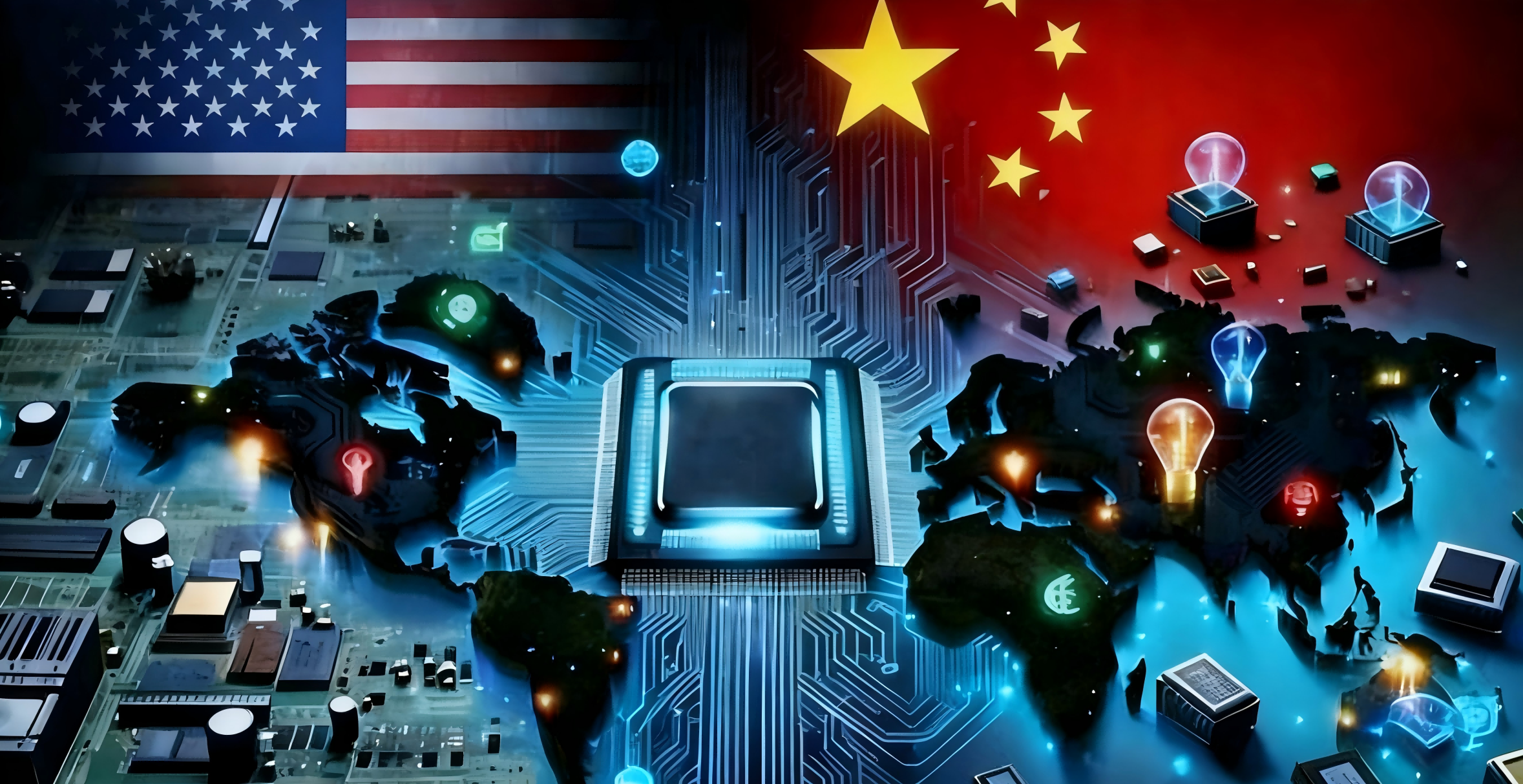
The substantive results achieved during the economic and trade consultations in Kuala Lumpur, Malaysia, have served as a stabilizer for the lithium battery industry chain.
China’s International Trade Representative and Vice Minister of Commerce, Li Chenggang, told media after the talks that the two sides had reached preliminary consensus on properly resolving a number of important economic and trade issues of mutual concern and would next carry out their respective domestic approval procedures.
In the field of export controls, the two sides temporarily stepped back. The U.S. agreed to suspend for one year the “50% penetration rule” on export controls it announced on September 29.
China had previously criticized this move as “extremely egregious and seriously damaging the legitimate rights and interests of the affected enterprises.”
At the same time, the U.S. will cancel the 10% so-called “fentanyl tariffs” imposed on Chinese goods, and the 24% reciprocal tariffs on Chinese goods will continue to be suspended for one year.
Looking back at China’s originally planned export control policy, its core was to target the most strategic segments of the lithium battery industry chain.
On October 9, China’s Ministry of Commerce and the General Administration of Customs jointly issued Announcement No. 58, deciding to implement export controls on lithium batteries and their manufacturing equipment, artificial graphite anode materials, and other items, originally scheduled to take effect on November 8, 2025.
This export control list focused on three major categories: high-end products, core equipment, and key technologies.
The control targets were precisely aimed at the most strategic parts of the lithium battery industry chain, rather than a blanket restriction.
For battery products, the control focused on rechargeable lithium-ion battery cells and battery packs with a weight energy density greater than or equal to 300Wh/kg.
These batteries have extremely high technical content and cover cutting-edge application areas such as long-range mid-to-high-end electric vehicles, electric vertical take-off and landing aircraft, high-end drones, and humanoid robots, with obvious dual-use characteristics.
At the same time, upstream manufacturing equipment such as winding machines, stacking machines, liquid injection machines, and formation and capacity testing systems were also included in the control list.
In addition, the policy also covered cathode materials, graphite anode materials, and related equipment and technologies, almost forming a closed loop of the entire industry chain from raw materials and production equipment to core technologies.
China’s absolute advantage in the global lithium battery industry chain is the foundation for its important voice in trade games.
From technical structure to production capacity scale, China’s position in the lithium battery industry chain is unshakable. Bloomberg points out that China currently accounts for about 96% of global cathode material production capacity and 85% of anode material production capacity.
In terms of production capacity, data from the Ministry of Industry and Information Technology shows that in 2024, China’s total lithium battery production reached 1170GWh, a year-on-year increase of 24%, and the total industry output value exceeded 1.2 trillion yuan.
Among them, power lithium batteries accounted for more than 70% of production, reaching 826GWh, mainly used in the field of new energy vehicles; energy storage lithium battery production was 260GWh, and consumer lithium battery production was 84GWh.
Export data is equally impressive. According to the latest customs statistics, from January to August 2025, China’s lithium-ion battery export volume was 3.003 billion units, a year-on-year increase of 18.66%; the export value of lithium-ion batteries was 48.296 billion US dollars, a year-on-year increase of 25.79%, continuing the stable growth trend.
It is worth noting that the U.S. market’s dependence on Chinese lithium batteries is very high. Bloomberg data shows that in the first seven months of 2025, about 65% of grid-scale energy storage lithium-ion batteries in the United States were imported from China.
And these batteries were exactly what the control covered. This also explains why there were obvious concerns in the American business community after China introduced the control policy.
China’s export control policy once put the United States under heavy energy pressure, exposing the fragility of its supply chain.
The impact on capital markets reflected the impact of China’s control measures on American companies: shares of U.S. Fluence Energy battery company and Tesla, which rely on Chinese battery components, once fell significantly.
While advancing energy localization, the United States still faces structural problems such as unstable sources of raw materials and reliance on imported manufacturing processes.
Although the United States has introduced the Inflation Reduction Act, launched local investment projects, and intensified the construction of alliances with Australia, South Korea, and other countries, systematic substitution still takes time.
Kilkreis, director of the Energy, Economy, and Security Project at the New American Security Center, bluntly stated, “Energy has become a constraint on the current U.S. AI data center infrastructure.”
In the fierce global artificial intelligence competition, a stable and reliable power supply has become key infrastructure no less important than advanced chips.
Between 2017 and 2023, the power consumption of U.S. data centers doubled. The power load brought by the rapid growth of the AI industry is becoming a bottleneck restricting expansion.
In this case, the issue of lithium battery supply and demand is no longer just a business operation issue. Once the supply is lost, it means that many American companies and even the operation of the U.S. power system will face severe challenges.
China’s decision to suspend lithium battery export controls for one year provides a buffer period for the market and is conducive to the stability of the global industrial chain.
Shanghai Nonferrous Metal Network analysis believes that this suspension measure involves the high-performance lithium-ion batteries, battery manufacturing equipment, and key raw materials (such as artificial graphite, cathode and anode materials, etc.) that were previously planned to be included in export licensing management.
It will help alleviate market concerns about export approval uncertainties and stabilize upstream and downstream supply and demand expectations.
The policy adjustment releases a signal of phased easing of Sino-U.S. economic and trade relations, which is conducive to the execution of export orders and the restoration of international cooperation in the lithium battery industry chain.
But the market still needs to pay attention to the policy direction and detailed changes after the one-year suspension expires.
An industry insider said that the tariff reduction is definitely good news, and the expected U.S. market battery demand and the company’s business growth rate should be ensured.
In the short term, Chinese energy storage companies’ exports to the United States are expected to increase significantly.
According to China Customs statistics, from January to September 2025, the number of lithium-ion battery exports was 3.399 billion, a year-on-year increase of 19.14%.
From January to September 2025, China’s lithium-ion battery export value was 55.38 billion U.S. dollars, a year-on-year increase of 26.75%.
But it is worth noting that since May, Germany has replaced the United States as the largest export market for Chinese lithium-ion batteries.
In the short term, the suspension of controls will help stabilize market sentiment and maintain the normal trade flow of lithium battery products.
Lithium battery companies from both China and the United States can use this one-year buffer period to adjust supply chain strategies and reduce concerns about future uncertainties.
In the long run, the competition in energy supply chains is more of an innovation race than a zero-sum game.
Whoever takes the lead in breaking through technical bottlenecks and building a more resilient industrial chain in this race will take the initiative in the global landscape of the new energy era.


 Hotline
 Email
Email
 Address
RM 2201, Longshenghengbo Center, Jianshe East Road and Bulong Road Intersection, Longhua District, Shenzhen, Guangdong, China
B13 Bldg, Lihe Zijing Science and Technology Innovation Center Headquarters, No. 55, Qinghu East Road, Qingxi Town, Dongguan City, Guangdong Province, P.R. China


 Previous