

Apr 27, 2026 |BAKTH
21700 vs 20700 Batteries: Full Comparison, Pros Cons & Buying Guide
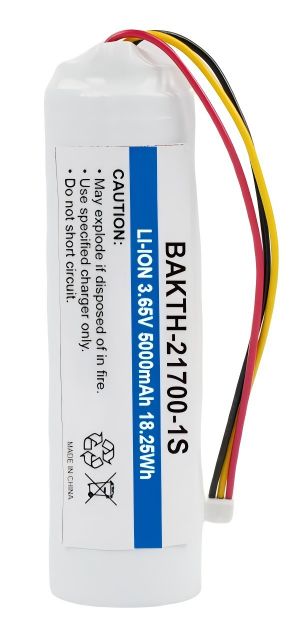 As portable electronics, power tools, electric mobility devices, and off-grid energy storage industries continue to expand globally, high-density cylindrical lithium-ion batteries have gradually replaced traditional 18650 cells. Among the most popular next-generation sizes, 21700 and 20700 batteries have become mainstream choices for OEM manufacturers, wholesale distributors, and industrial buyers worldwide.
Both 21700 and 20700 are optimized for higher energy density, stable discharge performance, and longer service life. They share the same 70mm length and standard 3.7V nominal voltage, which leads many buyers to confuse their specifications and application boundaries. However, subtle differences in diameter, capacity, discharge rate, weight, and internal structure create huge gaps in actual usage scenarios, cost performance, and market compatibility.
For bulk importers, power equipment suppliers, and battery pack assemblers, clearly understanding the differences between 21700 and 20700 is essential to reduce after-sales risks, control procurement costs, and improve product competitiveness. This comprehensive guide combines industry mainstream data, application case analysis, and professional parameter comparison to help you distinguish 21700 and 20700, select the correct model for your project, and make reasonable wholesale purchasing decisions.
Cylindrical lithium-ion battery models are named by fixed size rules: diameter + length.
Both cells adopt mature lithium-ion chemical systems, including NMC ternary lithium and partial LiFePO4 versions, with a full charge voltage of 4.2V and wide temperature adaptability. Compared with the classic 18650 battery, they have larger internal space, higher material filling capacity, and obvious advantages in energy storage and high-power output.
20700 was launched earlier as a transitional upgraded model, focusing on balancing volume and endurance. The 21700 battery was later optimized and upgraded, further expanding the diameter, greatly increasing single-cell capacity and energy density, and becoming the preferred cell for new energy equipment and high-power products.
| Specification | 20700 Battery | 21700 Battery |
|---|---|---|
| Size | 20mm×70mm | 21mm×70mm |
| Nominal Voltage | 3.7V | 3.7V |
| Typical Capacity | 3000mAh–4200mAh | 4000mAh–5000mAh |
| Continuous Discharge Current | 15A–35A | 15A–45A |
| Average Weight | 60g–68g | 70g–75g |
| Energy Density | Medium | High |
| Internal Resistance | Slightly higher | Low & more stable |
| Cycle Life | 800–1200 cycles | 1000–1500 cycles |
| Product Cost | Cost-effective | Slightly higher cost |
| Market Popularity | Gradually shrinking | Mass mainstream adoption |
From the data comparison, the 21700 battery wins in capacity, high discharge performance, consistency and cycle life, while the 20700 battery is lighter, more cost-effective, and more suitable for compact and cost-sensitive equipment.
Capacity is the core factor affecting device runtime. The 20700 limited by diameter, the maximum commercial mass production capacity is only 4200mAh. The 21700 has a wider internal cavity, mainstream capacity reaches 4500mAh–5000mAh, total stored energy increased by nearly 20%.
20700 supports 15A–35A continuous discharge. 21700 high-rate cells reach 45A, stable voltage, small sag, low heat, better consistency for battery packs.
20700 is slender and lightweight for compact devices. 21700 is 1mm wider, requires larger space, cannot directly replace 20700.
21700 uses newer production, lower IR, slower attenuation. Cycle life about 20% longer than 20700.
21700 mass production, sufficient supply. 20700 market demand shrinking, supply stability weak, not recommended for long-term projects.
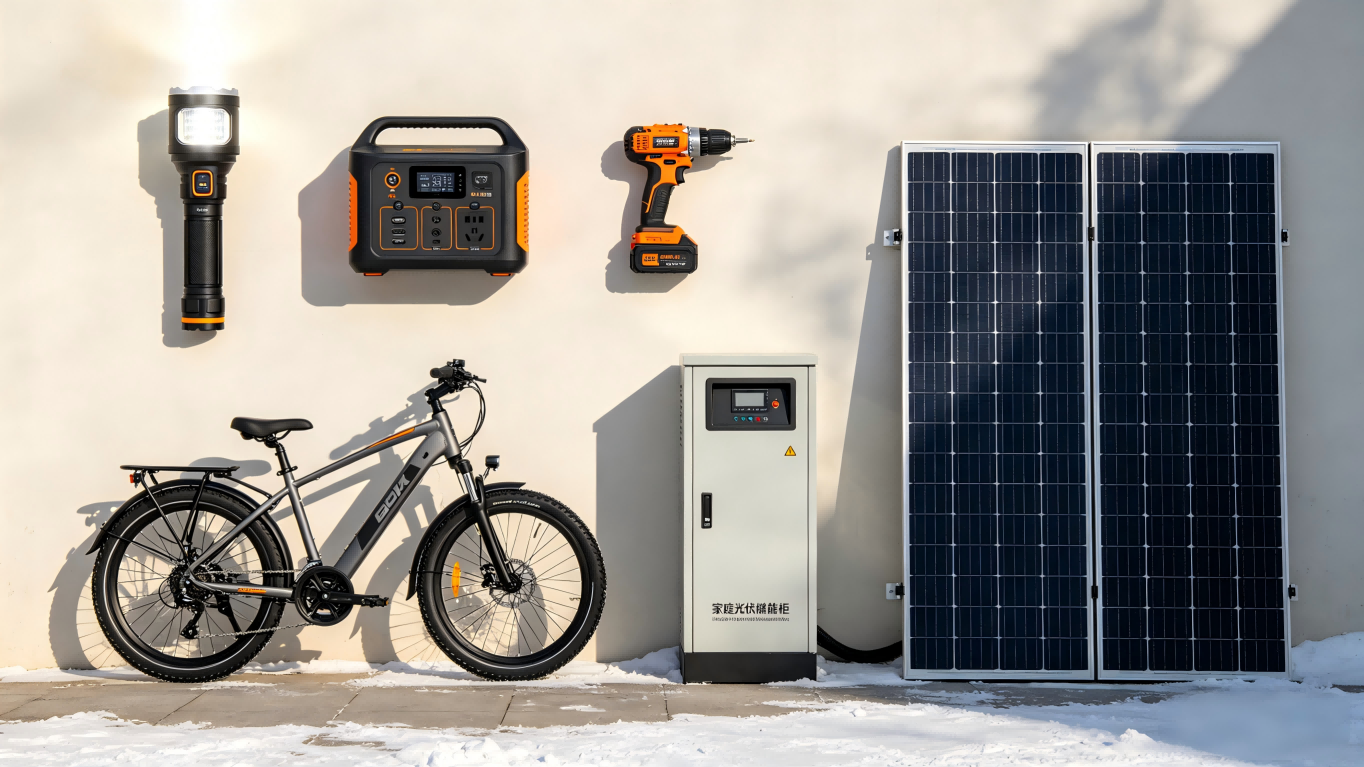
This is one of the most concerned questions for overseas buyers and engineers.
The answer is: not interchangeable.
Although they have the same voltage, length and similar appearance, the 1mm diameter difference will lead to installation failure, loose assembly, or extrusion deformation. Mixed use may cause overheating, short circuit, or bulging.
Q1: Which is better for wholesale business, 21700 or 20700?
A: 21700 is better for long-term, high-performance, and mainstream projects. 20700 is only suitable for short-term, cost-sensitive, and compact equipment orders.
Q2: Can 21700 batteries fit 20700 battery slots?
A: No. The 1mm diameter difference makes them physically incompatible and unsafe to force installation.
Q3: Are 21700 batteries worth the higher price?
A: Yes. Higher capacity, longer cycle life, and better stability reduce after-sales cost and improve product competitiveness.
Q4: Do both batteries support series and parallel connection?
A: Yes, but 21700 provides better consistency and lower failure rate for battery pack assembly.
Q5: What certifications are needed for bulk import?
A: UN38.3, MSDS, CE, RoHS, IEC62133 are essential for global transportation and customs clearance.
21700 and 20700, as two important upgraded models of cylindrical lithium-ion batteries, each have their own positioning and applicable markets. The 20700 is a cost-effective and lightweight transitional model, suitable for small and medium-power compact equipment; while the 21700 has become the mainstream choice of the industry relying on high capacity, high power, long life and stable supply, and is widely used in new energy, industrial tools, outdoor energy storage and other high-end fields.
For global wholesale buyers, distributors and OEM manufacturers, clarifying the performance boundaries and application differences between 21700 and 20700 is the key to optimizing the supply chain and improving product competitiveness. Choosing high-quality, certified and factory-direct supplied cells can not only ensure the stable output of terminal products, but also create higher profit margins for long-term cooperative business.


 Hotline
 Email
Email
 Address
RM 2201, Longshenghengbo Center, Jianshe East Road and Bulong Road Intersection, Longhua District, Shenzhen, Guangdong, China
B13 Bldg, Lihe Zijing Science and Technology Innovation Center Headquarters, No. 55, Qinghu East Road, Qingxi Town, Dongguan City, Guangdong Province, P.R. China


 Previous