

Apr 30, 2026 |BAKTH
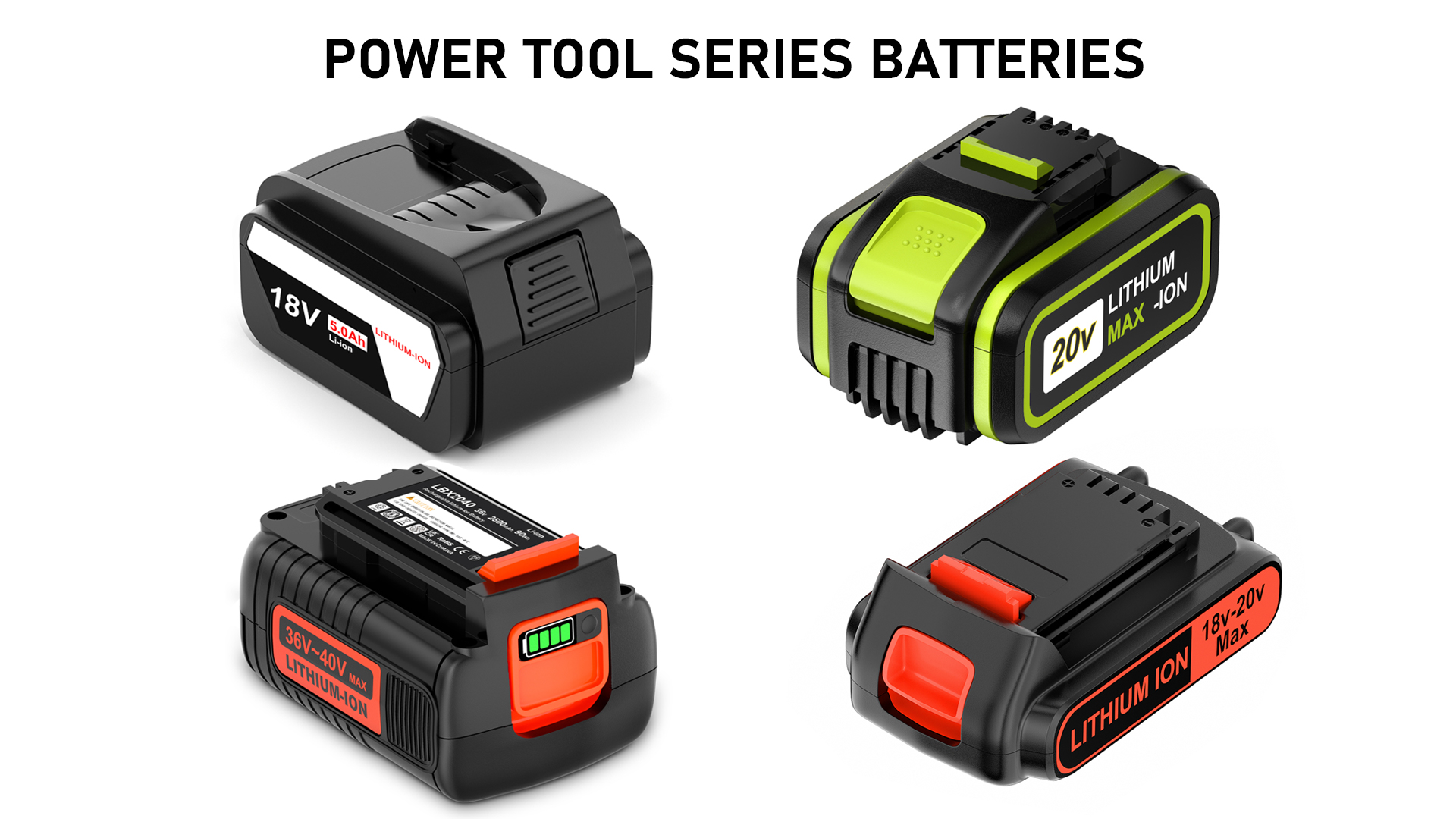
A high-performance power tool is only as reliable as its battery. For professional contractors, skilled tradespeople, and everyday DIY enthusiasts, weak and short-lived batteries often interrupt ongoing projects, limit working efficiency, and bring extra long-term replacement costs. With countless brands, varied battery designs, and complex technical specs saturating the market, choosing a dependable, long-lasting power tool battery brand has never been more critical.
Based on authoritative real-world testing and professional industry data throughout 2026, this in-depth guide elaborates on the importance of premium battery quality, objectively reviews 10 top-tier long-lasting power tool battery brands, shares actionable selection methods, and summarizes scientific maintenance skills to extend battery lifespan. Whether you need to replace aging batteries, expand your existing tool system, or source reliable bulk power solutions, this article will help you make a reasonable, budget-friendly and high-value purchase decision.
Not all lithium-ion power tool batteries are manufactured with the same standards. Cheap generic third-party batteries commonly suffer from unstable voltage output, poor heat dissipation, insufficient safety protection and shortened cycle life. In contrast, genuine premium branded batteries feature high-density cell configuration, built-in intelligent management systems and strict production standards, delivering consistent power, comprehensive safety safeguards and excellent long-term durability. Choosing high-quality batteries is closely related to work efficiency, operational safety and overall cost control.
The core advantage of high-quality original batteries is continuous and stable power output from full charge to low power. Even under heavy load, high-intensity cutting or long-time continuous operation, premium batteries maintain steady voltage, effectively avoiding tool speed reduction, torque attenuation and jitter problems that affect work precision.
Battery capacity, measured in Ampere-hour (Ah), directly decides continuous working time. Reasonably matching voltage and Ah rating allows drills, impact wrenches, circular saws and garden power tools to operate smoothly with fewer battery replacements. Optimized internal cell structure also balances lightweight design and energy storage capacity, reducing hand fatigue during long-hour handheld work.
Lithium-ion battery safety is an unavoidable key consideration for both professional users and families. Inferior unqualified cells are prone to abnormal overheating, shell bulging, internal short circuits and even thermal runaway under heavy use or improper charging. Top-grade power tool batteries are equipped with a mature intelligent BMS (Battery Management System) to monitor internal temperature, working current and output voltage in real time.
Complete built-in safety protection functions include:
These professional safety designs greatly reduce daily use risks and meet global mainstream industry certification standards. Once the battery appears abnormal heating, swelling, peculiar smell or leakage, please stop using and charging immediately to eliminate potential safety hazards.
Although premium branded batteries have a slightly higher upfront purchase cost, they bring more outstanding long-term cost performance. Conventional lithium-ion power tool batteries support 300 to 500 standard charge-discharge cycles under daily use, while upgraded high-end models can achieve longer cycle life through optimized electrode materials and structural design.
Genuine OEM batteries are perfectly compatible with official original chargers and power tools, with matched circuit protocols to reduce tool loss and aging. Low-cost incompatible replacement batteries often have unstable internal resistance, which will accelerate tool wear and increase subsequent maintenance and replacement costs in the long run.
After a full year of on-site simulation tests, high-load endurance tests and long-term aging cycle tests in 2026, we have selected 10 mainstream well-reputed brands with outstanding durability, stable comprehensive performance and wide applicability, covering professional engineering, industrial operation and household DIY usage scenarios.
DeWalt batteries are widely recognized for their rugged body structure and strong environmental adaptability, perfectly adapting to harsh construction sites and high-frequency professional operation. The classic FLEXVOLT series realizes automatic switching between 20V and 60V voltage, supporting cross-platform use of multiple tools and greatly improving equipment flexibility and practicability.
With professional drop resistance, collision resistance and dustproof sealing design, DeWalt lithium-ion batteries maintain stable output under long-term high-load operation. The average service life can reach 2–3 years of daily use, fully meeting the long-term continuous work needs of frontline construction workers.
Milwaukee’s core competitiveness lies in its mature REDLITHIUM battery technology, which delivers 2.5 times longer continuous runtime, 20% higher stable output power and double cycle life compared with ordinary lithium batteries. It can work stably in extreme low-temperature environments as low as -18°C, making it ideal for outdoor construction in cold regions and open-air operation.
Equipped with an exclusive REDLINK intelligent monitoring system and efficient circulating heat dissipation structure, Milwaukee HIGH OUTPUT batteries keep low operating temperature under heavy load, effectively restraining power attenuation caused by overheating. It is the preferred choice for professional users who pursue long endurance and high stable power output.
Makita LXT series batteries focus on fast charging efficiency and balanced comprehensive performance, winning high recognition in the decoration, woodworking and equipment maintenance industries. The supporting high-speed official charger can fully charge an 18V 3.0Ah battery in only 30 minutes, greatly shortening waiting time and improving overall work efficiency.
The built-in active heat dissipation fan conducts air circulation cooling during charging, effectively reducing cell temperature and slowing down internal aging. With stable voltage output, low failure rate and wide compatibility, Makita batteries have always maintained a leading position in the mid-to-high-end power tool battery market.
Bosch ProCORE18V batteries adopt miniaturized high-density cell design, which is lightweight, portable and easy to operate, without sacrificing core output power. Diversified voltage specifications such as 12V, 18V and 36V cover household daily use, light maintenance and light industrial operation demands.
Featuring no memory effect and ultra-low self-discharge characteristics, Bosch batteries can retain power for a long time after standby, ready for use at any time. The overall compact and lightweight design effectively reduces handheld burden, suitable for long-time fine operation and indoor narrow-space work.
Ryobi provides cost-effective battery solutions for mass DIY users and household consumers. Its unified universal battery platform design allows a single battery to match multiple series of power tools, effectively reducing the overall purchase budget and equipment storage pressure.
It offers rich capacity options ranging from 1.5Ah to 4.0Ah, which can flexibly cope with daily household maintenance, small-scale renovation and courtyard garden work. The product is affordable, easy to purchase and replace, and highly friendly for entry-level users and family occasional use.
Black & Decker is deeply engaged in the household light power tool field, and its 20V MAX lithium battery has an excellent ultra-low self-discharge rate, which can store power stably for up to 500 days without frequent charging.
The built-in intelligent temperature control chip effectively prevents overload damage and abnormal power consumption. The battery is light in weight, simple to disassemble and replace, and perfectly compatible with household hand drills, screwdrivers, small cutting tools and cleaning equipment.
WORX relies on the innovative PowerShare cross-voltage battery sharing technology to realize the universal use of 20V and 40V tool equipment, bringing high flexibility for family multi-functional tool sets. The MaxLithium series batteries support fast charging and real-time remaining power display, convenient for users to grasp power status.
Free of memory effect, it maintains stable charge-discharge cycle performance in long-term repeated use. With moderate price and reliable basic performance, it is a cost-effective choice for budget-limited families and amateur DIY lovers.
Metabo HPT (formerly Hitachi Power Tools) is equipped with advanced MultiVolt technology, which freely switches between 18V and 36V to meet the high-power output demand of industrial-grade heavy-duty tools.
The high-strength impact-resistant resin shell and multi-layer protective structure can resist severe vibration and harsh working environments. Multiple protection mechanisms such as overcharge, over-discharge and overload are fully configured to ensure long-term stable operation, trusted and recognized by industrial workers and engineering teams.
Hilti batteries stand for top-tier industrial safety and extreme durability, tailored for heavy-duty construction, mining and infrastructure projects. The 22V Nuron battery platform delivers consistent high power across drills, breakers and saws, with robust housing that withstands drops, vibration and moisture.
Integrated BMS provides multi-level protection against overheating, short circuits and overload, while advanced cell balancing extends cycle life to 600–800 charges. Hilti batteries are a top pick for professionals prioritizing safety, reliability and long-term performance on critical jobsites.
Hikoki (formerly Hitachi Koki) specializes in high-efficiency lithium batteries for professional and light industrial use, balancing premium performance and reasonable affordability. Its 18V/36V MultiVolt batteries support flexible voltage switching, compatible with a full lineup of power tools, from hand drills to angle grinders.
Featuring low internal resistance and outstanding heat dissipation design, Hikoki batteries deliver steady output under continuous heavy load, with a service cycle of 500–700 charges. The streamlined lightweight design relieves long-operation fatigue, making it perfect for carpentry, metal processing and general contracting work.
| Brand | Core Positioning | Best For | Key Advantage |
|---|---|---|---|
| DeWalt | Jobsite heavy-duty durability | Professional contractors | Shockproof, dustproof, wide voltage adaptation |
| Milwaukee | Extreme weather & long runtime | Cold region outdoor work | Low-temperature resistance, long cycle life |
| Makita | Fast charging & stable daily use | Decoration & woodworking | 30-minute fast charge, low failure rate |
| Bosch | Compact & lightweight design | Indoor fine work | Miniaturized body, low self-discharge |
| Ryobi | High cost performance | Household DIY users | Multi-tool universal, affordable price |
| Black & Decker | Light-duty home use | Daily household maintenance | Long standby time, easy to replace |
| WORX | Cross-platform compatibility | Family multi-tool sets | PowerShare universal battery system |
| Metabo HPT | Industrial heavy-load operation | Factory & engineering teams | MultiVolt dual voltage switching |
| Hilti | High-standard industrial safety | Infrastructure & mining | Heavy impact resistance, complete protection |
| Hikoki | High cost-effective industrial use | Metal processing & contracting | Low heat generation, long service cycles |
Different working intensities and usage scenarios correspond to different battery configuration requirements. You can quickly lock in the most suitable battery type according to charging speed, endurance demand, working environment and budget.
For professional engineering teams and continuous operation scenarios, fast-charging batteries are essential to improve work efficiency. Traditional ordinary batteries take 3–5 hours to fully charge, while the new generation of fast charging technology can reach 80% power in 15 minutes and full charge within 30 minutes.
Milwaukee super fast charging system and Makita high-speed charging series solve the pain point of frequent power failure in peak working periods, ensuring continuous and uninterrupted operation.
High Ampere-hour (Ah) high-capacity batteries bring longer continuous runtime, suitable for large-area construction, outdoor engineering operations and long-time high-intensity work. High-capacity battery packs reduce the frequency of repeated replacement and charging, and greatly optimize overall work progress.
Modern mainstream lithium-ion batteries do not contain toxic heavy metal substances, meeting global environmental protection standards and supporting professional unified recycling and harmless treatment. Standardized waste battery recycling can reduce environmental pollution and realize sustainable resource utilization.
The latest smart batteries and supporting chargers realize two-way data interaction, automatically adjusting charging current, voltage and temperature according to cell status. This intelligent charging mode slows down cell aging, stabilizes battery performance and extends overall service life.
Major mainstream power tool brands adopt exclusive structural design and independent protocol locking. Batteries of different brands cannot be mixed and universally used. It is recommended to unify a single brand tool system in the early stage of purchase to maximize battery compatibility and utilization.
Battery voltage determines the overall output power of the tool, while Ah capacity decides sustainable working time. High-voltage batteries are suitable for heavy cutting and high-torque impact work; medium and low-voltage batteries meet daily screwing, drilling and light operation. Reasonably match the capacity according to daily working intensity.
Genuine brand batteries are equipped with complete official warranty services. Before purchasing, compare the warranty period, after-sales policy and global service coverage to avoid high maintenance costs and difficult after-sales problems in the later stage.
| Battery Spec | Application Scenario | Recommended Ah | Typical Tools |
|---|---|---|---|
| 12V–14.4V | Light household work | 1.5Ah–2.0Ah | Mini drills, screwdrivers |
| 18V–20V | Daily maintenance & renovation | 3.0Ah–4.0Ah | Impact drills, circular saws |
| 36V–60V | Heavy-duty cutting & impact | 5.0Ah–8.0Ah | Angle grinders, wrenches, chain saws |
No matter how excellent the quality is, lithium batteries have a limited service life. It is necessary to replace the battery in time once the following aging abnormalities occur:
Power tool batteries are the core energy source of all cordless equipment. Investing in high-quality, brand-certified lithium batteries can not only ensure stable tool output and safe operation, but also effectively reduce frequent replacement costs and hidden safety hazards in the long run.
In the 2026 market, DeWalt, Milwaukee and Makita remain the most reliable benchmark choices for professional high-intensity scenarios; Hilti and Hikoki offer premium industrial-grade performance for heavy-duty jobs; while Ryobi, WORX and Black & Decker provide cost-effective and practical power solutions for household users and DIY enthusiasts. No matter which brand and model you choose, standardized daily use, scientific storage methods and correct charging habits are the key to delaying battery aging and maximizing service life.
With the continuous innovation and upgrading of lithium battery technology, future power tool batteries will develop towards higher energy density, smaller size, stronger environmental adaptability and higher safety. Choosing a mature and stable battery system can help your power tools maintain efficient and stable operation for a long time.
Q1: Are third-party replacement power tool batteries worth buying?
A1: Budget third-party batteries are suitable for occasional light DIY use, but they lack complete BMS safety protection and strict cell screening. For long-term high-frequency professional use, original OEM batteries are more recommended, with better stability, safety and compatibility to avoid tool damage and safety risks.
Q2: Can different brands of power tool batteries be mixed for use?
A2: No. Each brand has exclusive structural bayonet, circuit protocol and voltage management design. Mixed use will cause poor contact, circuit short circuit, tool burnout and even safety accidents. Please use the supporting battery of the corresponding brand.
Q3: How long is the normal service life of a power tool lithium battery?
A3: Under standardized use and proper maintenance, conventional lithium batteries can last 2–3 years with 300–500 charge cycles. High-end industrial-grade batteries can reach 500–800 cycles, while improper charging and high-temperature use will greatly shorten the service life.
Q4: Should I drain the battery completely before charging?
A4: Lithium-ion batteries have no memory effect. It is not necessary to drain the power completely. It is better to charge when the remaining power is 20%–30%. Deep discharge for a long time will accelerate cell aging and irreversible capacity loss.
Q5: How to properly store power tool batteries when not in use for a long time?
A5: Keep the remaining power at 50%–60%, remove it from the power tool, and store it in a cool, dry and ventilated place, away from high temperature, humidity and sharp objects. Check and replenish power every 3 months to avoid over-damage.


 Hotline
 Email
Email
 Address
RM 2201, Longshenghengbo Center, Jianshe East Road and Bulong Road Intersection, Longhua District, Shenzhen, Guangdong, China
B13 Bldg, Lihe Zijing Science and Technology Innovation Center Headquarters, No. 55, Qinghu East Road, Qingxi Town, Dongguan City, Guangdong Province, P.R. China


 Previous