

May 13, 2026 |BAKTH
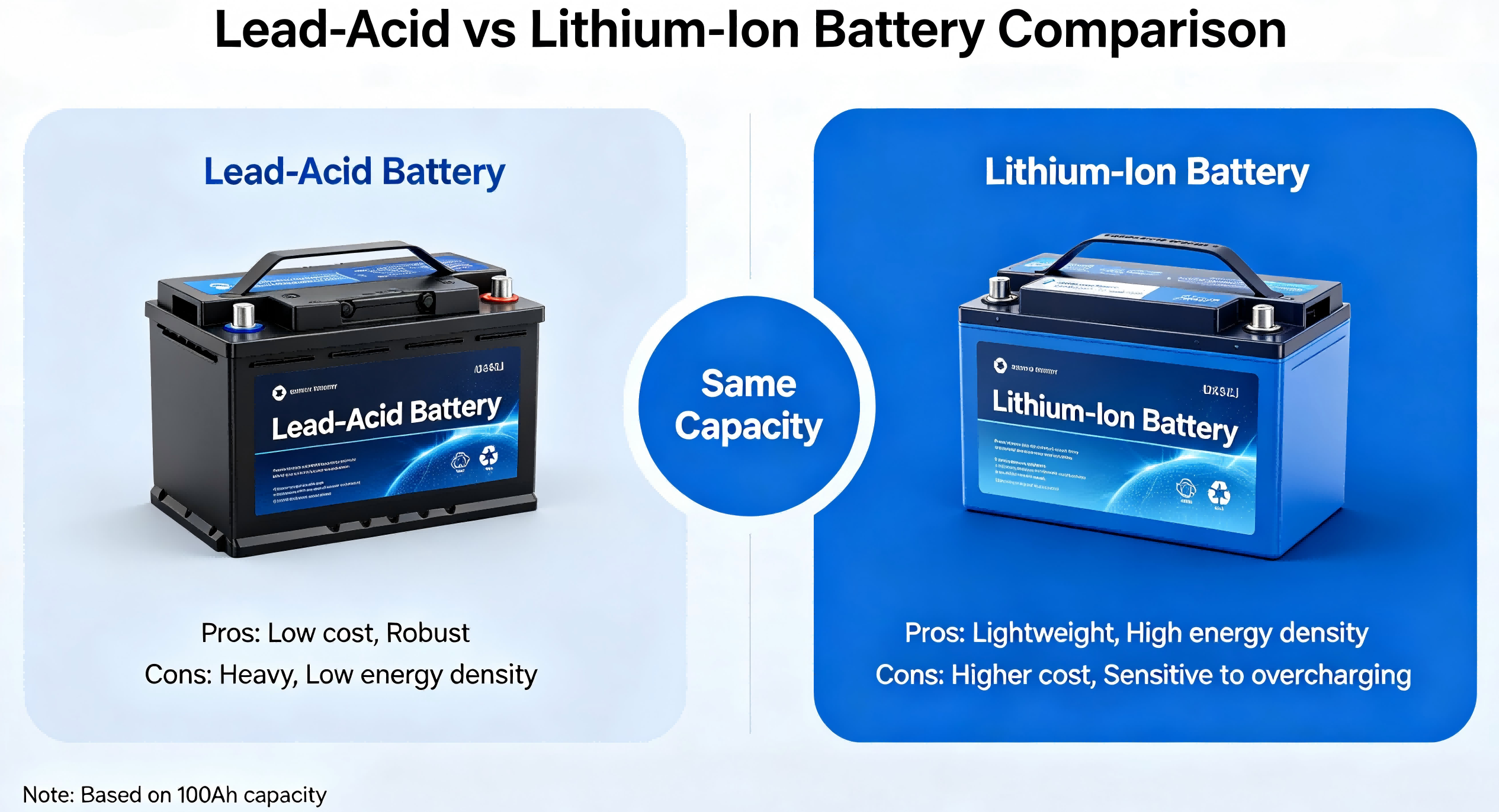
Choosing reliable energy storage batteries is essential for residential solar systems, RV power solutions, marine equipment, off-grid living and industrial backup power. When shopping for storage batteries, most buyers face a tough choice: traditional lead acid batteries or modern lithium batteries.
Many consumers hold an old belief that lead acid batteries are safer due to their long market history. However, with advanced manufacturing technology and complete safety design, high-quality lithium batteries, especially LiFePO4 lithium iron phosphate batteries, have proven to be far safer, more stable and more user-friendly for daily and commercial applications.
In this in-depth guide, we mainly focus on safety performance, compare all hidden risks and practical advantages, list detailed applicable scenarios, and help you make the most cost-effective and safest battery purchase decision.
Safety is the top priority for battery installation and long-term use. The following table clearly shows the essential safety differences between lead acid batteries and lithium batteries.
| Safety Factor | Lead Acid Battery | LiFePO4 Lithium Battery |
|---|---|---|
| Flammable Gas Emission | Releases explosive hydrogen gas during charging, easy to cause fire and explosion in enclosed spaces | Zero flammable gas generation during charge and discharge, no explosion risk |
| Electrolyte Leak Risk | Contains corrosive liquid sulfuric acid, easy to leak after aging, vibration and long-term use | Fully sealed solid structure, no liquid electrolyte, completely free from leakage and corrosion |
| Internal Thermal Stability | Poor heat resistance, easy to swell and overheat under overcharge or heavy load | Ultra stable chemical structure, high thermal runaway temperature, excellent high temperature resistance |
| Intelligent Safety Protection | No built-in protection module, relies purely on external devices for safety control | Built-in full-function BMS battery management system for all-round active protection |
| Overcurrent & Short Circuit Safety | Easily overheats and triggers safety hazards once short circuit occurs | Automatically cuts off power output to avoid dangers under abnormal electric current |
| Indoor Use Safety | Needs strict ventilation, not recommended for closed indoor installation | Safe to install indoors, in vehicles and narrow confined spaces without extra ventilation |
| Eco-Friendly Level | Contains lead heavy metals, causes environmental pollution and health threats | Free of harmful heavy metals, eco-friendly and harmless to human body |
Although lead acid batteries feature low initial cost, their inherent chemical defects bring many unavoidable safety risks that cannot be ignored.
As the new generation mainstream energy storage product, LiFePO4 lithium battery solves almost all safety pain points of lead acid batteries from raw material structure to internal circuit design, becoming the preferred safe battery choice for global users.
LiFePO4 batteries adopt stable olivine crystal structure. No flammable or harmful gas will be produced in the whole working cycle. Users can install these batteries in living rooms, bedrooms, vehicle interiors and other closed spaces safely without special ventilation design.
High-standard lithium batteries adopt integrated sealing technology with solid internal materials instead of liquid corrosive electrolyte. No liquid leakage occurs no matter in static storage or bumpy mobile use, keeping surrounding devices safe and clean.
Every qualified lithium battery pack is equipped with built-in BMS management system, supporting overcharge, overdischarge, overcurrent, overtemperature and short circuit protection. It cuts off power automatically once abnormality appears to avoid thermal runaway.
Passed strict extrusion, drop and extreme temperature tests, stable in harsh environment. Free of lead, mercury and other toxic metals, fully compliant with household and commercial environmental safety standards.
✅ Longer lifespan: 3000-6000 cycles, 10-15 years service life vs 3-5 years of lead acid
✅ Higher energy efficiency: 90%-95% round-trip efficiency, less energy waste
✅ Lightweight & flexible installation: 50%-70% lighter, support horizontal, vertical and wall mounting
✅ Totally maintenance-free: no water adding, no regular cleaning needed
✅ Deeper discharge available: safe 80%-90% DoD to maximize storage capacity
Choose lead acid batteries only if you have extremely limited budget and just need temporary power supply.
If you prioritize safety, long-term stability, low failure rate and less later maintenance cost, LiFePO4 lithium battery is definitely the best choice. Although the initial purchase cost is higher, it saves frequent replacement fees and safety maintenance costs, achieving much higher long-term cost performance.
Q1: Are lithium batteries really safer than lead acid batteries for home use?
A1: Yes absolutely. Qualified LiFePO4 has no hydrogen explosion risk, no liquid leakage and full BMS protection, perfectly safe for indoor installation.
Q2: Can I mix lithium and lead acid batteries in one system?
A2: Not recommended. Different voltage and discharge features will cause imbalance, shorten lifespan and cause safety hazards.
Q3: Do lithium batteries need daily maintenance?
A3: No, fully maintenance-free, no need to add water or clean terminals regularly.
Q4: Which one is more cost-effective in long term?
A4: Lithium battery. 3-5 times longer service life greatly cuts total investment within 10 years.
Q5: What is the best DoD for daily LiFePO4 use?
A5: Keep depth of discharge within 80% to balance power output and cycle lifespan.
We are professional lithium battery manufacturer focusing on high-safety LiFePO4 energy storage batteries for global projects. All products pass CE, UN38.3, RoHS full certifications with upgraded intelligent BMS system.
Need professional battery matching advice? Consult our battery experts freely
Email: info@bak-tech.com | Tel: +86 138 2871 3564


 Hotline
 Email
Email
 Address
RM 2201, Longshenghengbo Center, Jianshe East Road and Bulong Road Intersection, Longhua District, Shenzhen, Guangdong, China
B13 Bldg, Lihe Zijing Science and Technology Innovation Center Headquarters, No. 55, Qinghu East Road, Qingxi Town, Dongguan City, Guangdong Province, P.R. China


 Previous