

May 25, 2026 |BAKTH
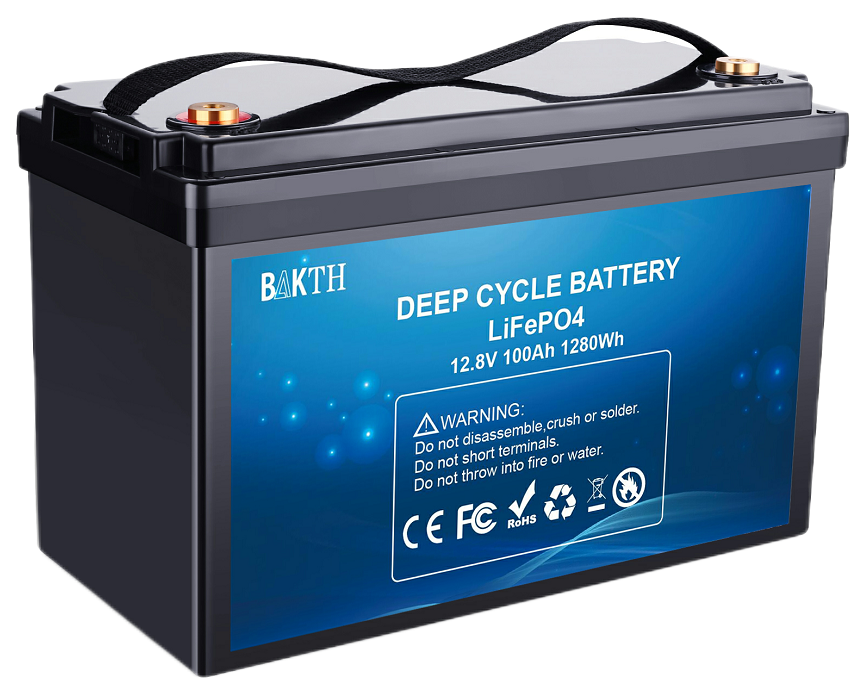
LiFePO4 batteries own stable chemical structure and adopt multi-stage charging mechanism. Normally, full charging duration ranges from 2 to 6 hours, affected by three major elements: LiFePO4 battery capacity, lithium charger output current and real-time battery state of charge.
Larger LiFePO4 battery paired with low-current lithium charger needs longer charging cycles, while fast charger cuts charging time greatly. Still, every adjustment on LiFePO4 charger speed brings distinct influence on lithium battery stability and long-term lifespan.
Battery capacity decides total charging workload. A 100Ah BAKTH LiFePO4 battery holds double energy compared with a 50Ah LiFePO4 model, so it spends more time getting fully charged under the same lithium charger.
Charger amperage is the core factor changing LiFePO4 charger speed. 10A slow charger delivers steady low current, while 20A fast charger raises charging efficiency remarkably. This creates the main gap between slow lithium battery charging and fast lithium battery charging.
All LiFePO4 batteries follow fixed charging rules. Fast lithium battery charging works efficiently only within 20% to 80% SOC. Once exceeding 80%, the system switches to low-current absorption mode to balance cell voltage and prevent overcharging, which obviously slows down LiFePO4 charger speed.
BAKTH LiFePO4 batteries perform best when charged at 10°C to 30°C. Charging under extremely cold or hot conditions will activate BMS temperature protection, lowering charging current or suspending charging to protect LiFePO4 battery cells.
Brand new well-balanced LiFePO4 batteries support stable fast lithium battery charging. Aging batteries come with higher internal resistance, generating extra heat during high-current charging, which reduces LiFePO4 charger speed and raises degradation risks.
No matter slow or fast lithium battery charging, the last 20% capacity needs low-current balancing, an essential step to keep LiFePO4 battery cells consistent.
Clear conclusion: Frequent excessive fast lithium battery charging accelerates LiFePO4 battery aging and shortens lithium battery lifespan.
Fast lithium battery charging injects high current into LiFePO4 battery cells in short time, resulting in accumulated internal heat and chemical pressure. Different from lead-acid batteries, LiFePO4 cells are sensitive to continuous high current and high temperature, two top reasons causing irreversible damage to lithium batteries.
Note: BMS protection can reduce risks yet cannot eliminate aging caused by long-term habitual fast lithium battery charging.
Absolutely yes. Slow lithium battery charging is the most reliable way to maintain LiFePO4 battery health and extend lithium battery lifespan.
Low-current slow lithium battery charging enables lithium ions to move and embed steadily, producing minimum heat and chemical pressure. It remains the safest charging mode to retain LiFePO4 battery capacity, highly recommended for daily regular lithium battery charging work.
The proper LiFePO4 charger speed depends fully on your practical usage scene. Below is targeted comparison covering RV power, off-grid solar, marine equipment and backup power system, matching optimal lithium battery charging mode for BAKTH LiFePO4 batteries.
RV lithium batteries focus on long-term stability and reliable off-grid power supply. Most users charge LiFePO4 batteries via solar panels or shore power overnight.
Marine power batteries and emergency standby batteries require high stability and safety. Slow lithium battery charging removes overheating hazards and keeps LiFePO4 batteries in healthy standby state.
When facing urgent power supplement demand, fast lithium battery charging becomes the optimal option. It sacrifices minor lithium battery aging loss for high time efficiency, suitable for temporary power shortage cases.
| Charging Mode | Cycle Life | Energy Efficiency | Safety Level | Best Application |
|---|---|---|---|---|
| Slow Charging | 3000–5000+ cycles | Higher | Excellent | Daily RV lithium battery, solar storage, long-term battery storage |
| Fast Charging | 1000–2000 cycles | Slightly lower | Good (with BMS) | Emergency temporary lithium battery charging |
BAKTH professional LiFePO4 chargers are precisely calibrated for LiFePO4 battery chemical properties, equipped with accurate CC/CV multi-stage charging, intelligent temperature adaptation and full safety protection. These lithium chargers match all BAKTH 12V LiFePO4 batteries well for RV, solar and marine power supply.
| Battery Model | BAKTH Recommended Charger | Estimated Full Charge Time |
|---|---|---|
| 12V 50Ah LiFePO4 | 12V 10A Lithium Charger | ~5 Hours |
| 12V 100Ah LiFePO4 | 12V 20A Lithium Charger | ~5–6 Hours |
Both charger models maintain safe 0.3C–0.4C charging rate, balancing quick power replenishment and long-term LiFePO4 battery protection, the cost-effective daily charging solution for RV and off-grid solar users.
LiFePO4 charger speed acts as a vital element deciding long-term use value of lithium batteries. Slow lithium battery charging maximizes LiFePO4 battery lifespan and use safety, while fast lithium battery charging only serves temporary emergency power demand.
For RV camping, off-grid solar power and long-term energy storage scenes, sticking to standard moderate and slow lithium battery charging is the best way to protect your BAKTH LiFePO4 battery investment. With matched BAKTH dedicated LiFePO4 charger and scientific lithium battery charging habits, your LiFePO4 batteries can output stable efficient power over thousands of cycles, delivering reliable off-grid power support for outdoor travel and daily power consumption.
BAKTH supplies professional LiFePO4 batteries and supporting lithium charging accessories for RV, marine and solar energy storage systems. All products pass CE, UN38.3 and RoHS safety certifications with full BMS protection. Contact our professional team to get system matching suggestions and customized lithium battery technical solutions.
Certified, safe, and built for RV, camping, solar and marine applications. Full-protection BMS, wide temperature range, and long cycle life.
BAKTH | Professional LiFePO4 Battery Manufacturer
Email: info@bak-tech.com | Tel: +86 138 2871 3564


 Hotline
 Email
Email
 Address
RM 2201, Longshenghengbo Center, Jianshe East Road and Bulong Road Intersection, Longhua District, Shenzhen, Guangdong, China
B13 Bldg, Lihe Zijing Science and Technology Innovation Center Headquarters, No. 55, Qinghu East Road, Qingxi Town, Dongguan City, Guangdong Province, P.R. China


 Previous