

Jun 15, 2026 |BAKTH
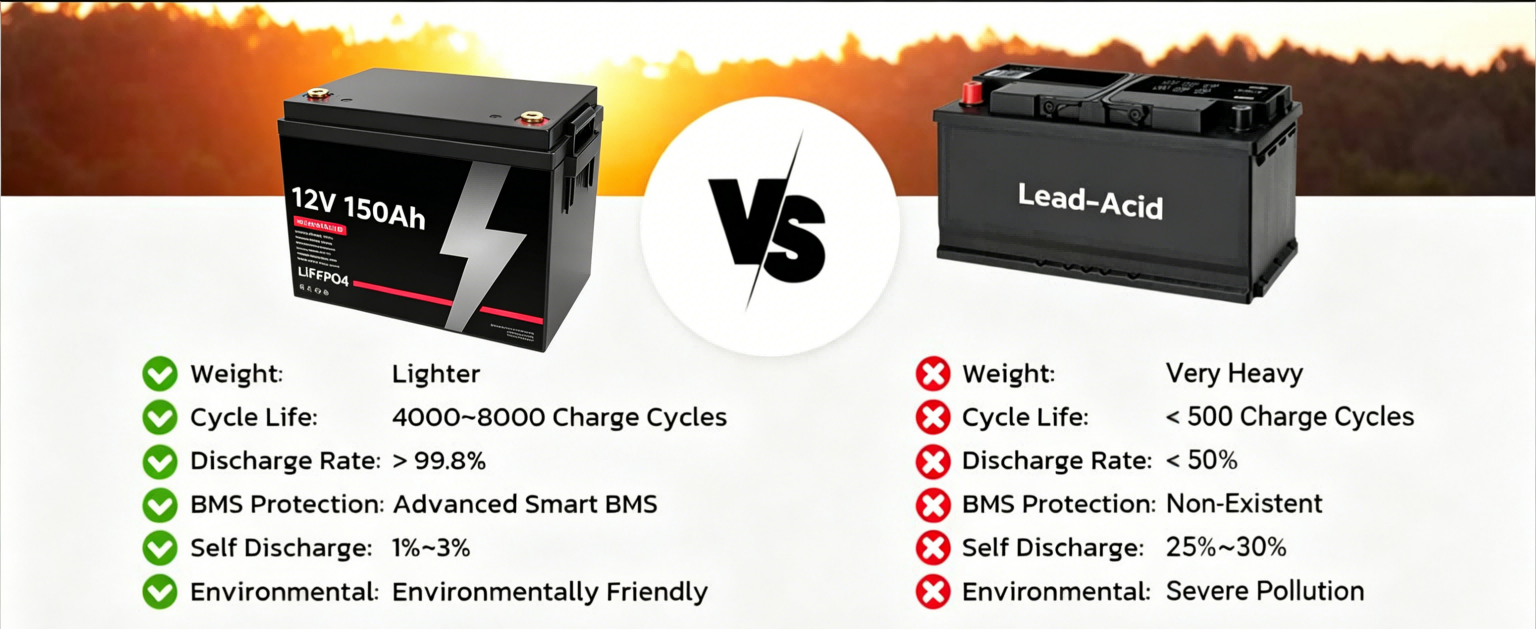
Lithium batteries come with a higher upfront price than traditional lead-acid batteries, a common concern for battery wholesalers, OEMs and project contractors serving RV, marine, off-grid solar and industrial sectors. However, initial cost should never be the only evaluation standard.
Built with premium materials, smart protection systems and strict quality controls, lithium batteries deliver superior safety, longer lifespan and lower operational expenses. Industry data shows they cut overall operating costs by 30%–40% over 3+ years of continuous use. This guide breaks down lithium’s cost structure, value proposition and procurement tips to help you make data-driven purchasing decisions.
The price premium stems from four essential cost drivers:
LiFePO4 and other lithium chemistries require high-purity raw materials and complex production processes. Reputable manufacturers exclusively use Grade A cells with stable performance and low internal resistance, which cost far more than recycled or low-grade cells. Lead-acid batteries rely on mature, low-cost material chains, keeping their production expenses low.
Every qualified lithium pack is fitted with a dedicated Battery Management System (BMS). It monitors voltage, current and temperature in real time, and provides protection against overcharge, over-discharge, short circuits and overheating, alongside cell balancing functions. BMS design, components and assembly add notable manufacturing costs, which lead-acid batteries do not require.
High-end commercial lithium batteries include practical upgrades such as Bluetooth monitoring, low-temperature heating modules and emergency start functions. These features enhance user experience but add extra R&D and production spending.
Lithium batteries face strict global safety regulations. Each batch undergoes aging, temperature cycle and safety tests, plus mandatory certifications like CE and UL. Comprehensive quality checks reduce failure risks but increase labor and time costs, unlike low-cost lead-acid products with simplified testing.
The extra upfront investment brings tangible long-term benefits:
LiFePO4 features excellent thermal stability. Paired with BMS, it avoids overheating, leakage and fire hazards. It produces no toxic fumes or corrosive acid, making it ideal for enclosed spaces such as RVs and boats.
Standard lead-acid batteries only last 200–500 charge cycles. Qualified lithium batteries reach 3,000–5,000 partial cycles before capacity drops to 80%, drastically reducing replacement frequency and downtime.
Lead-acid batteries are limited to a 50% maximum depth of discharge (DoD) to avoid damage. A 100Ah lead-acid battery only delivers 50Ah usable power, while a 100Ah lithium battery supports 80%–100% DoD and provides nearly full rated capacity.
Matched with compatible chargers, lithium batteries charge 4–6 times faster than lead-acid units, with no lengthy absorption phase. This is a major advantage for fleets and mobile devices needing frequent recharging.
Lithium batteries weigh up to 70% less than equivalent lead-acid batteries, lowering load for vehicles and vessels, and cutting logistics costs for cross-border shipping.
Lithium’s monthly self-discharge rate is below 3%, compared to up to 15% for lead-acid. It needs no regular watering or routine maintenance, saving ongoing labor costs.
Free of lead and harmful acid, lithium batteries generate less waste thanks to longer service life, complying with global environmental policies.
| Comparison Item | LiFePO4 Lithium Battery | Lead-Acid (AGM/Gel) Battery |
|---|---|---|
| Upfront Cost | Higher | Low |
| Cycle Life (80% SOH) | 3,000 – 5,000 cycles | 200 – 500 cycles |
| Recommended Max DoD | 80% – 100% | 50% |
| Usable Capacity (100Ah) | ~100Ah | ~50Ah |
| Full Charging Time | 2–3 hours | 10–12 hours |
| Relative Weight | 30% of lead-acid | 100% |
| Monthly Self-Discharge | < 3% | Up to 15% |
| Daily Maintenance | None | Required |
| Thermal Safety | Excellent | Average |
| Operating Temperature | -20°C ~ 60°C | -20°C ~ 50°C |
Total Cost of Ownership (TCO) matters more than one-time purchase price for commercial use. Over a 5-year cycle:
For projects running longer than 3 years, lithium is the more cost-effective choice.
Not all lithium products are equal, and price differences reflect clear quality gaps:
Note: Lithium batteries priced far below the market average inevitably cut corners on core components.
Over the past decade, advancing technology, expanded production and fierce market competition have steadily reduced lithium battery prices. Costs will keep declining moderately in the coming years, accelerating lithium’s replacement of lead-acid across multiple scenarios.
That said, prices for high-quality Grade A lithium products will stay stable. The price divide caused by cell grade, configurations and certifications will persist.
Lithium batteries’ higher upfront cost pays off via premium materials, smart protection, reliable performance and long-term savings. For B2B buyers, evaluating products by TCO rather than just initial price is key to avoiding quality risks and after-sales losses.
We supply standard LiFePO4 and lithium-ion batteries for RV, marine, solar storage and e-bike applications. All products adopt Grade A cells and full-featured BMS, with complete certifications, sample support and OEM services. Contact us for detailed parameters and wholesale quotes.
Grade A cells + full BMS + complete certifications, ideal for RV, marine, solar and industrial projects.
BAKTH | Professional Lithium Battery Manufacturer & Global B2B Supplier
LiFePO4 & Lithium-ion Batteries for RV, Marine, Solar & E-Bike
Email: info@bak-tech.com | Tel: +86 138 2871 3564


 Hotline
 Email
Email
 Address
RM 2201, Longshenghengbo Center, Jianshe East Road and Bulong Road Intersection, Longhua District, Shenzhen, Guangdong, China
B13 Bldg, Lihe Zijing Science and Technology Innovation Center Headquarters, No. 55, Qinghu East Road, Qingxi Town, Dongguan City, Guangdong Province, P.R. China


 Previous