

Jun 19, 2026 |BAKTH
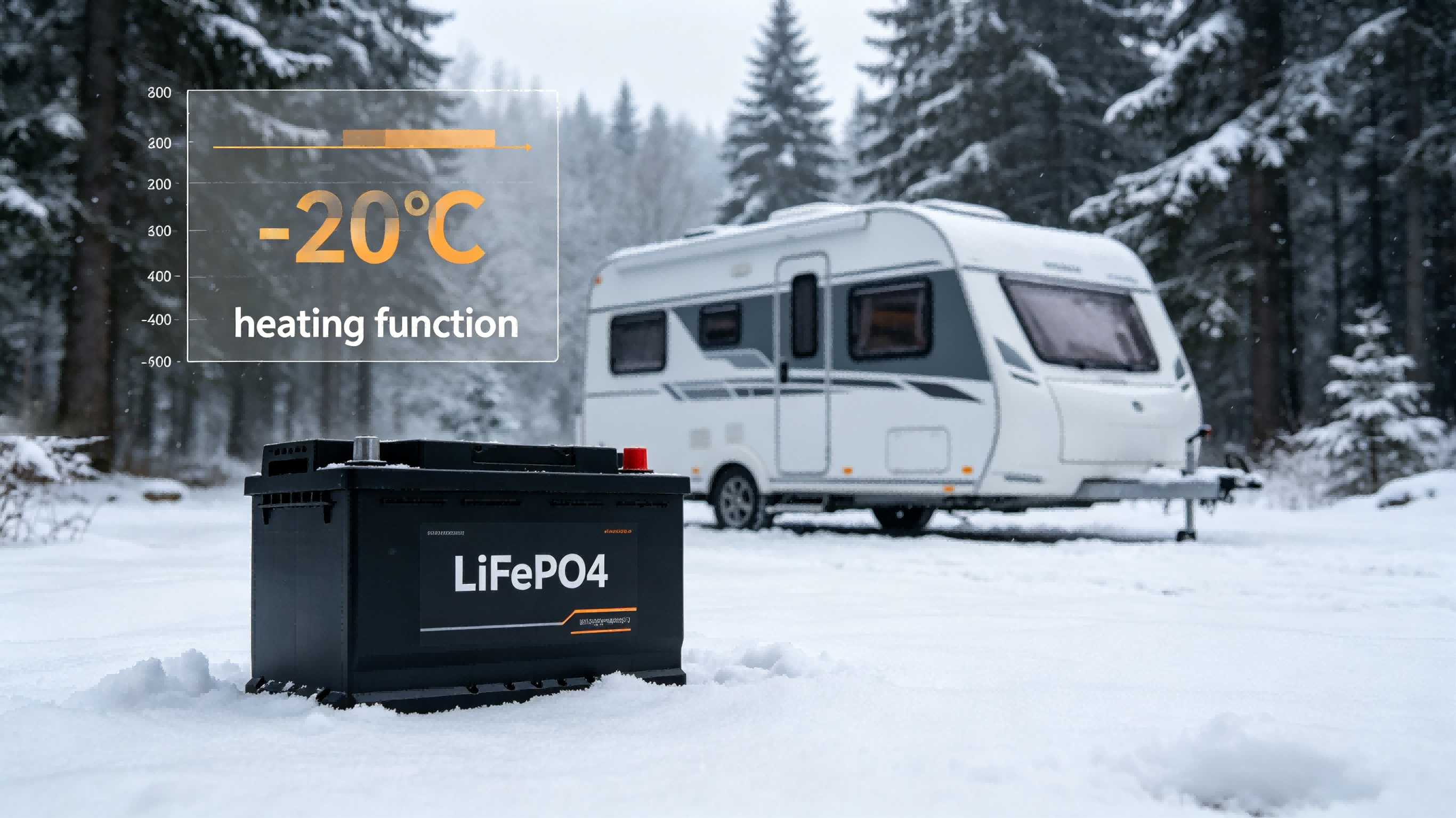
Winter cold drastically impacts battery performance across RVs, off-grid backup power, marine gear, portable electronics and industrial equipment. For B2B wholesalers, OEMs, fleet managers and end users operating in cold regions, choosing a winter-ready battery is not just a purchase decision — it is the key to avoiding unexpected downtime, permanent cell damage and costly after-sales issues.
Whether you are sourcing bulk batteries for retail distribution or designing power systems for cold-climate projects, you need to evaluate four core factors. This guide breaks down each consideration with industry data, practical insights and professional advice tailored for cold-environment applications.
Battery chemistry is the foundational factor determining performance in freezing temperatures. Different cell materials show obvious gaps in capacity retention, power output and long-term stability when the mercury drops.
Traditional lead-acid batteries (including AGM and gel types) suffer severe capacity loss in extreme cold. Test data shows lead-acid units can lose 40% to 60% of their rated capacity at -10°C, and their power delivery becomes unstable under heavy loads. They are affordable but unreliable for long-term winter use.
Lithium-ion batteries deliver far better cold-weather efficiency and energy density. Among mainstream lithium variants, LiFePO4 (LFP) stands out for enhanced low-temperature tolerance. Compared with standard NMC lithium cells, LiFePO4 maintains more stable chemical activity and higher usable capacity in sub-zero environments.
Why this matters: Selecting the right chemistry directly decides how much available power your devices can draw in winter. For commercial and outdoor applications in cold zones, LiFePO4 is the preferred choice to ensure consistent daily operation.
Nearly all rechargeable batteries are sensitive to sustained freezing temperatures. Prolonged exposure to cold not only cuts runtime but also causes irreversible internal damage, especially during charging. To maintain stable performance, thermal protection and heating systems become essential accessories.
Basic thermal enclosures and battery insulation wraps can slow heat loss and keep cells above critical low limits. For areas with temperatures consistently below -10°C, built-in heating elements are a game-changing upgrade. Many professional low-temperature lithium battery models feature self-heating systems powered directly by the charger, requiring no extra wiring or external power sources.
Premium low-temperature (LT) series lithium batteries are engineered to support normal charging at -20°C (-4°F). The built-in heating system warms cells to a safe range before charging starts, effectively preventing lithium plating and permanent degradation.
Why this matters: Charging any lithium battery below 0°C poses a high risk of permanent damage. Proper insulation and heating modules eliminate this hazard and extend the overall service life of your battery fleet.
Cold weather impacts two core functions: discharging and charging. While most batteries can still supply limited power in freezing conditions, many struggle to accept charge normally.
Industry standards widely recommend not charging standard lithium batteries below 0°C (32°F). Low temperatures thicken electrolyte and slow lithium ion movement, leading to high internal resistance. Forcing charging in this state creates lithium dendrites on the anode, which gradually destroy cell structure over time.
When sourcing cold-weather batteries, always verify official charging parameters. Pair batteries with temperature-adaptive chargers and smart Battery Management Systems (BMS). A qualified cold-climate BMS can monitor cell temperature in real time, cut off charging at unsafe low limits or activate heating functions automatically.
Why this matters: A battery that cannot charge reliably in winter will leave equipment powerless. Matching batteries with cold-rated chargers and intelligent BMS is a must for remote RVs, off-grid systems and seasonal industrial gear.
Long, harsh winters accelerate battery wear and tear. Frequent cycles between cold discharge and rewarming, plus occasional deep discharge, will shorten the total lifespan of unqualified batteries. Durability and cycle performance in low temperatures are critical evaluation indicators for bulk procurement.
In lead-acid families, AGM and gel batteries are more durable than flooded lead-acid cells in cold climates, but their total cycle life is still limited to 300–500 times.
In contrast, low-temperature optimized lithium batteries, especially LiFePO4 models with integrated heating structures, deliver outstanding durability. Their typical cycle life reaches 2,000 to 4,000 times, 4–8 times longer than regular lead-acid products. Even after years of winter use, their capacity fade remains within a reasonable range.
Why this matters: Investing in durable cold-weather batteries reduces replacement frequency, cuts long-term operational costs and lowers after-sales complaints for your business.
When purchasing batteries for cold environments, evaluate the four factors above comprehensively:
If you have custom demands for extreme low-temperature scenarios or large-scale wholesale plans, consult professional battery technical teams to match the most cost-effective solutions for your climate and application.
BAKTH cold weather battery series supports safe charging down to -20°C, ideal for RV, marine, off-grid storage and industrial equipment in frigid zones.
BAKTH Technical Team | Professional Low-Temperature Lithium Battery Manufacturer
Custom LiFePO4 Battery Packs For Cold Climate RV, Marine, Solar & Industrial Power
Email: info@bak-tech.com | Tel: +86 138 2871 3564


 Hotline
 Email
Email
 Address
RM 2201, Longshenghengbo Center, Jianshe East Road and Bulong Road Intersection, Longhua District, Shenzhen, Guangdong, China
B13 Bldg, Lihe Zijing Science and Technology Innovation Center Headquarters, No. 55, Qinghu East Road, Qingxi Town, Dongguan City, Guangdong Province, P.R. China


 Previous