Most consumers and B2B buyers assume battery swelling only happens after months or years of aging, overcharging, or heavy use. But a surprising number of brand-new, unused lithium-ion and LiFePO4 batteries arrive already swollen straight from packaging. This alarming issue stems from hidden factory flaws, rough transit mishandling, improper warehouse storage, and pre-delivery chemical instability—not regular wear and tear.
This comprehensive guide breaks down every root cause of swelling in fresh lithium batteries, outlines critical safety hazards, walks you through how to inspect new cells before use, and shares compliant disposal and return procedures for retailers, warehouse operators, OEMs, and residential customers across North America, Europe, and Australia.
Table of Contents
- What Causes Brand-New Lithium Batteries to Swell Straight Out of the Box
- Factory Manufacturing Defects (Primary Root Cause)
- Hidden Mechanical Damage During Shipping & Logistics
- Improper Pre-Sale Warehouse Storage Conditions
- Faulty Built-In BMS or Pre-Charging Errors
- How To Spot Swelling On Brand-New Lithium Batteries (3 Quick Checks)
- Serious Safety Dangers of Using a Swollen New Lithium Battery
- Step-by-Step Safe Handling & Disposal For Defective Swollen New Cells
- How Manufacturers & Wholesalers Prevent New Battery Swelling
- Frequently Asked Questions About Swollen Brand-New Lithium Batteries
- Final Key Takeaways
1. What Causes Brand-New Lithium Batteries to Swell Straight Out of the Box
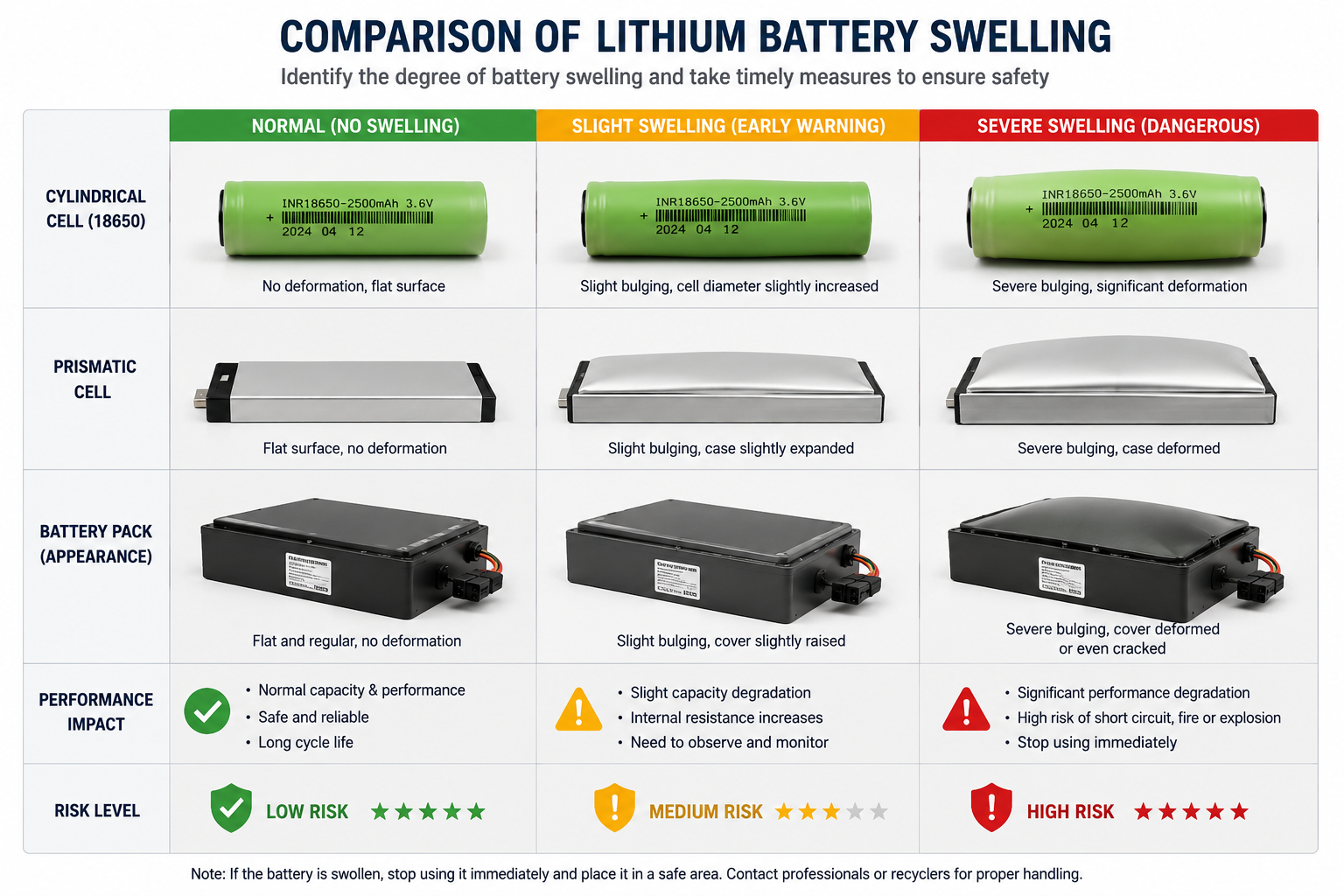
Battery swelling forms when trapped gas builds up inside the sealed cell casing. For fully new, unused batteries, gas production never stems from long-term cycling. The four leading triggers below affect cylindrical, prismatic, and pouch lithium cells alike.
1.1 Factory Manufacturing Defects (Primary Root Cause)
Low-quality mass production shortcuts are the top reason fresh batteries puff before ever being powered on. Even cells that pass basic visual inspections can carry invisible internal flaws that trigger gas buildup while sitting idle:
- Poor vacuum sealing & moisture intrusion: If pouch or cylindrical cell seals fail during production, ambient humidity seeps inside. Water reacts violently with lithium electrolyte to form hydrogen, CO₂, and corrosive hydrofluoric acid, creating constant gas pressure within days of packaging.
- Excess water contamination in electrolyte: Strict factory standards limit cell moisture to ppm-level thresholds. Budget manufacturers skip rigorous drying processes, leaving excess water inside cells that decomposes electrolyte and generates gas during shelf storage.
- Uncontrolled electrode burrs & misaligned layers: Jagged metal edges on cathode/anode sheets pierce the thin separator film, creating micro internal short circuits. Tiny shorts produce steady heat and gas even with zero load on the battery.
- Uneven electrolyte injection: Insufficient electrolyte coverage leads to localized lithium plating inside new cells, triggering continuous side chemical reactions and swelling before first use.
- Substandard raw materials: Impure cathode/anode powders introduce unstable compounds that break down and release gas during idle shelf time.
1.2 Hidden Mechanical Damage During Shipping & Logistics
Even unopened batteries sustain invisible internal harm during cross-continental transport:
- Rough pallet stacking, dropping shipments, or heavy compression crushes cell casings, tearing internal separators without leaving visible exterior dents.
- Vibration from trucks, ships, and freight carriers loosens internal electrode layers, causing minor shorts and slow gas accumulation mid-transit.
- Sharp packaging edges puncture soft pouch cell aluminum laminate, letting air and moisture penetrate sealed cells while en route to warehouses.
Many swollen new batteries develop puffing exclusively after weeks of transit damage, only becoming noticeable once customers open retail boxes.
1.3 Improper Pre-Sale Warehouse Storage Conditions
Batteries stored incorrectly in distributor or retail warehouses swell rapidly before reaching end buyers:
- Long-term storage in unventilated hot warehouses (temperatures above 40°C / 104°F) accelerates electrolyte decomposition, generating trapped gas inside sealed cells. Summer shipping containers and attic stock rooms create extreme heat that ruins brand-new inventory within weeks.
- Extended storage at near-0% state of charge (deep discharge): Batteries held fully drained for months break down their protective SEI film, destabilizing internal chemistry and causing swelling even with zero usage.
- High-humidity warehouse environments degrade outer packaging, slowly leaking moisture into cell terminals and sealed housings over storage periods.
1.4 Faulty Built-In BMS or Pre-Charging Errors
All finished lithium packs ship pre-charged at the factory, and defective protection circuits create swelling risk for brand-new units:
- Malfunctioning factory charging equipment overcharges cells during pre-shipment conditioning, breaking down electrolyte and locking excess gas inside the sealed casing.
- Low-quality integrated BMS boards with broken overcharge protection leave cells unregulated during factory charging, creating permanent internal damage before packaging.
- Mismatched series-parallel cell groups inside multi-cell packs create voltage imbalance during pre-charging; weaker individual cells degrade and swell while the full pack remains unopened.
2. How To Spot Swelling On Brand-New Lithium Batteries (3 Quick Checks)
Inspect every new lithium cell or pack immediately after unboxing using three simple tests, no specialized tools required:
- Visual Flatness Check
Lay the battery on a flat hard surface. Brand-new healthy cells sit flush with zero gaps underneath. If the rock or wobbles, or the casing curves outward visibly, swelling has already occurred. For pouch cells, watch for bubbled, stretched laminate film.
- Odor Test
Sniff the battery casing and terminal area. A sharp, chemical, sweet or acrid odor signals electrolyte leakage and internal gas buildup—discontinue handling right away.
- Fit Test For Device-Specific Packs
If the battery is meant for an RV, power tool, laptop, or e-bike, test if it slides smoothly into its designated compartment. Swollen new batteries will jam, push casing panels apart, or fail to seat correctly.
3. Serious Safety Dangers of Using a Swollen New Lithium Battery
Many users mistakenly believe minor swelling on an unused battery is harmless, but factory-defective swollen cells carry identical catastrophic risks as aged swollen batteries:
- Thermal runaway & fire hazard: Trapped internal gas creates constant pressure; minor impact, charging, or temperature shifts can rupture the casing and ignite flammable electrolyte vapors.
- Toxic corrosive leakage: Ruptured swollen cells release hydrofluoric acid that causes permanent chemical burns to skin, eyes, and respiratory tissue when inhaled.
- Permanent device damage: Expanded cell casings press against circuit boards, wiring, and plastic frames, cracking internal hardware and shorting equipment circuits.
- Cascading pack failure (multi-cell packs): One swollen defective cell creates heat that spreads to adjacent brand-new cells, triggering full pack failure and fire risk in storage or operation.
Critical Rule: Never charge, install, or power any device with a visibly swollen brand-new lithium battery.
4. Step-by-Step Safe Handling & Disposal For Defective Swollen New Cells
Follow this compliant process for retail staff, warehouse teams, and residential users discovering swollen unopened batteries:
Before Removal & Transport
- Move the battery outdoors, away from all flammable materials (cardboard, fabric, wood, fuel).
- Do not plug the battery into any charger, device, or power supply.
- Put on safety gloves and protective eyewear before touching the swollen unit.
- Allow the battery to naturally self-discharge in open air over 24–48 hours to reduce internal charge pressure.
During Handling
- Only use plastic non-conductive tools to move the battery; avoid metal tweezers, screwdrivers, or knives that could puncture the casing.
- Never squeeze, poke, drill, or cut a swollen new cell to “release gas”—puncturing triggers instant flammable vapor release and fire risk.
Post-Handling Disposal & Returns
- Cover positive and negative terminals with electrical tape to prevent accidental short circuits during transit.
- Place the swollen battery inside a fireproof, non-flammable plastic or metal container (sand-lined bins work best for bulk warehouse stock).
- For retail/warranty returns: Ship the sealed container back to your supplier per their defective goods protocol, clearly labeling “SWOLLEN DEFECTIVE LITHIUM BATTERY – HAZARDOUS MATERIAL”.
- For end-user disposal: Deliver the unit to a certified lithium battery recycling center or electronics hazardous waste drop-off; swollen lithium cells cannot go into standard household trash or curbside recycling bins.
5. How Manufacturers & Wholesalers Prevent New Battery Swelling
Reputable lithium suppliers implement strict factory and logistics controls to eliminate swelling in fresh inventory:
- Full low-humidity production workshops with automated vacuum sealing to lock out moisture during cell assembly.
- Automated moisture testing for every batch of electrolyte and finished cells before packaging.
- Controlled low-stress pallet packaging with foam cushioning to eliminate transit crushing and vibration damage.
- Climate-controlled warehouse storage maintained between 15°C–25°C, with all inventory held at a safe 40–60% pre-charge SOC.
- Automated factory charging stations with temperature-compensated BMS testing for every finished pack before shipment.
- Pre-delivery batch visual and thickness inspections to catch minor swelling before products reach retail channels.
Budget off-brand battery manufacturers skip these quality steps, leading to far higher rates of swollen brand-new cells within consumer shipments.
6. Frequently Asked Questions About Swollen Brand-New Lithium Batteries
Q1: Can an entirely unused, uncharged brand-new lithium battery swell?
A: Yes. Factory sealing defects, moisture contamination, or electrode burr micro-shorts create gas buildup while the battery sits idle in its original packaging, even with zero charge cycles.
Q2: Is a slightly swollen new lithium battery safe to use temporarily?
A: No. Any visible puffing signals irreversible internal chemical damage. Even minor swelling carries latent thermal runaway risk and will rapidly worsen once charging or discharging begins. Always replace immediately.
Q3: Can I deflate or repair a swollen brand-new lithium battery myself?
A: There is no safe repair method. Internal gas forms from permanent electrolyte breakdown; puncturing the cell releases toxic flammable vapors and may cause combustion. Defective swollen new batteries require full replacement and professional recycling only.
Q4: Does cold shipping stop brand-new batteries from swelling?
A: Cold transport slows gas generation temporarily, but it cannot reverse existing internal factory defects. Once batteries warm up in warehouses or homes, swelling will reappear or accelerate within days.
Q5: Are LiFePO4 batteries less likely to swell straight out of the box than NMC lithium cells?
A: LiFePO4 has more stable chemistry, but poor manufacturing standards still cause swelling in brand-new LFP packs. Low-cost uncertified LiFePO4 cells carry identical moisture and sealing defect risks as NMC variants.
Q6: Can I store a swollen new lithium battery indoors overnight?
A: Only if placed in a fireproof metal bin, isolated from furniture, fabrics, and other electronics. Long-term indoor storage of swollen lithium cells is strongly discouraged; prioritize same-day recycling or return shipping when possible.
7. Final Key Takeaways
Lithium battery swelling is not exclusive to old, heavily cycled units—factory production flaws, rough freight damage, hot warehouse storage, and faulty pre-charging regularly cause brand-new, unopened lithium cells to bulge before first use. All swollen new batteries present severe fire, chemical burn, and equipment damage risks and must never be installed or charged.
For B2B buyers, OEMs, and retailers: Prioritize certified manufacturers with full moisture control, automated cell testing, and climate-controlled logistics to minimize defective swollen inventory claims. For residential users: Inspect every new battery immediately after unboxing, follow safe outdoor handling protocols for swollen units, and submit warranty returns or hazardous waste recycling right away if puffing is detected.
Zero Defect Low-Puff Grade A Lithium Cells & Custom Packs
BAKTH adopts full low-humidity production, automated moisture testing and climate-controlled logistics to eliminate new cell swelling defects for wholesale OEM and warehouse bulk orders.
✅ Strict Vacuum Sealing Process
✅ Batch Moisture Inspection
✅ Temperature Compensated BMS
✅ OEM Bulk Wholesale Supply
BAKTH Safety Technical Team | Certified Low-Defect Lithium Battery Manufacturer
Industrial, RV, Marine & Energy Storage LiFePO4 / Lithium-Ion Packs With Full Quality Control
Email: info@bak-tech.com | Tel: +86 138 2871 3564




 Hotline
 Email
Email
 Address


 Previous