Table of Contents
- Critical Warning: A Swollen Battery Is Not Just Cosmetic Damage
- Top 3 Root Causes of Swelling on 12V AGM & Lithium Batteries
- 1. Unregulated Overcharging & Mismatched Charging Gear
- 2. Sustained High Heat & Poor Ventilation
- 3. Natural Aging or Hidden Manufacturing Defects
- Why a Bloated 12V Battery Creates Serious Safety Hazards
- Emergency Step-by-Step Protocol If You Discover a Swollen Battery
- Can You Fix or Keep Using a Slightly Bloated Battery? Clear Answer
- 6 Proactive Tips to Prevent 12V Battery Swelling Long-Term
- Frequently Asked Questions (Google PAA Optimized)
- Final Safety Summary
Critical Warning: A Swollen Battery Is Not Just Cosmetic Damage
Whether you run an off-grid solar setup, power a caravan/motorhome, set up camping fridge power, or rely on 12V marine and vehicle batteries, your battery bank is the core of your entire power system.
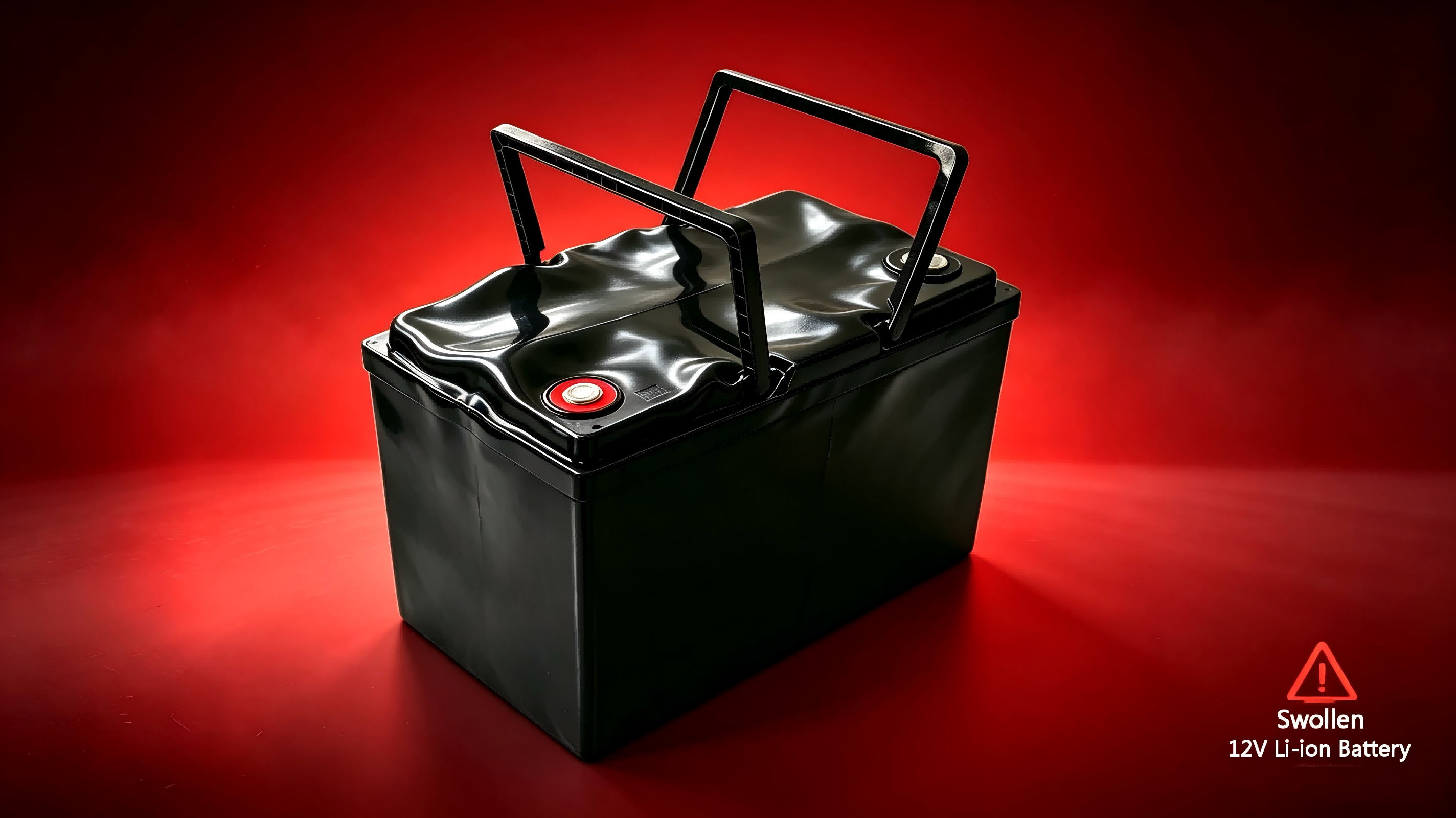
When you spot visible bulging, warped casing, or a puffy battery surface, this is an urgent red flag — internal chemical breakdown has already occurred, and dangerous flammable gas has built up inside the sealed cell. Swelling affects all common 12V battery types: AGM deep-cycle, LiFePO4 lithium, lead-acid leisure and vehicle starter batteries.
This guide breaks down exactly what triggers bloating, all life-threatening risks, safe emergency handling steps, compliant hazardous waste disposal, and simple maintenance habits to stop swelling from happening again.
Top 3 Root Causes of Swelling on 12V AGM & Lithium Batteries
All battery swelling stems from trapped internal gas generated by damaged chemical reactions inside sealed casings. The three most widespread triggers for 12V systems:
1. Unregulated Overcharging & Mismatched Charging Gear
This is the #1 cause of bloated caravan, solar and RV batteries. Cheap unregulated AC/DC chargers, faulty solar regulators, or using a charger designed for the wrong battery chemistry pump excessive voltage and current into cells.
Overcharging accelerates electrolyte decomposition, releases large volumes of flammable hydrogen gas, and builds irreversible internal pressure that warps the plastic battery casing. Always use multi-stage smart chargers, DC-DC converters and solar charge controllers calibrated specifically for AGM or lithium 12V batteries.
2. Sustained High Heat & Poor Ventilation
Batteries degrade rapidly under elevated temperatures. Hot ambient air, cramped unventilated battery boxes, storage near engine bays, or leaving rigs parked in full summer sun all force internal gases to expand.
Many off-grid and caravan owners discover swollen batteries after summer storage — confined battery compartments can hit 50°C+ in direct sunlight, speeding gas buildup and permanent casing deformation.
3. Natural Aging or Hidden Manufacturing Defects
All rechargeable batteries undergo slow chemical breakdown over their service life. After years of regular charge-discharge cycles, internal side reactions continuously produce trace gas that accumulates over time, leading to mild or severe swelling as the battery reaches end-of-life.
Rare but possible factory defects, such as contaminated electrolyte or imperfect cell sealing, can also cause premature bloating even with perfect charging and temperature management. In both cases, a swollen battery is no longer safe for continuous use.
Why a Bloated 12V Battery Creates Serious Safety Hazards
Never dismiss minor bulging as a harmless quirk of an old battery. Trapped gas and damaged internal cells create multiple urgent dangers:
- Corrosive electrolyte leakage: AGM batteries leak sulfuric acid; lithium packs vent flammable toxic electrolyte fluid that burns skin and damages surrounding wiring, cabinetry and camping gear.
- Rupture & explosion risk: Built-up internal pressure can split the battery casing violently, spraying flammable gas and corrosive liquid.
- Fire & thermal runaway hazard: Swollen lithium cells are far more likely to trigger thermal runaway when charging or under load, igniting nearby fabric, plastic and wood in confined RV/battery box spaces.
- Permanent equipment damage: Expanding battery casings crush wiring, brackets and adjacent battery cells, causing short circuits and full system failure.
Hard rule to memorize: Never squeeze, puncture, cut or flatten a swollen battery to release gas — mechanical force instantly triggers full rupture and fire risk.
Emergency Step-by-Step Protocol If You Discover a Swollen Battery
Follow this safe workflow the second you spot bulging, warping or abnormal battery puffing:
- Full System Power Down & Immediate DisconnectTurn off all loads, unplug solar panels and disconnect all charger power sources. Wear protective rubber gloves when handling the battery to avoid chemical contact burns. Minimize unnecessary lifting or moving the bloated unit.
- Relocate to a Cool, Ventilated Hazard ZoneCarefully carry the battery outdoors to a flat concrete or tile surface, at least 3 meters away from wood, fabric, fuel cans, camping gear and other flammable materials. If you spot fluid leaks, fully ventilate the caravan, shed or battery room to disperse toxic fumes.
- No Repairs, No Recharging, No ReuseThere is no DIY fix for a swollen battery. Once internal gas buildup and cell damage occur, the battery’s chemistry is permanently compromised. Attempting to charge, discharge or patch the casing will only escalate fire risks.
- Arrange Compliant Hazardous Waste DisposalSwollen 12V AGM and lithium batteries are classified hazardous waste — never toss them into household trash, recycling bins or landfill waste.
Drop off options: local battery retail collection points, municipal council hazardous waste facilities, certified lithium/lead-acid recycling centres, or manufacturer take-back programs for RV power systems.
- Diagnose Root Cause to Avoid Repeat DamageBefore installing a replacement battery, inspect your full power setup: test charger voltage regulation, check battery box ventilation gaps, relocate batteries away from direct heat sources, and confirm your charger mode matches your new battery’s chemistry (lithium vs AGM).
Can You Fix or Keep Using a Slightly Bloated Battery? Clear Answer
Short answer: No, even minor swelling means immediate replacement is mandatory.
Many off-grid and caravan owners make the dangerous mistake of continuing to use a “slightly puffy” battery that still powers lights and fridges normally. Visible bulging confirms irreversible internal cell damage and trapped flammable gas, creating a ticking fire hazard every time you charge or draw heavy load from the battery.
No amount of cooling, partial discharging or adjusting charging settings can reverse the chemical breakdown that caused swelling. Retain the battery only temporarily in a fireproof isolated outdoor area until you can arrange certified recycling.
6 Proactive Tips to Prevent 12V Battery Swelling Long-Term
Stop battery bloating before it starts with these simple maintenance and setup rules for RV, camping, solar and marine 12V systems:
- Use chemistry-matched multi-stage smart chargers & solar regulators
Always select charging equipment with dedicated AGM or LiFePO4 lithium profiles; avoid generic unregulated trickle chargers that overvoltage cells.
- Never exceed your battery’s rated maximum charge current
Check the battery manufacturer’s specs and limit charger output to the recommended safe charging rate to reduce heat and gas generation.
- Install batteries in cool, well-ventilated compartments
Drill extra ventilation holes in sealed battery boxes, avoid mounting batteries near engine heat exchangers, and park RVs/caravans in shaded spots during summer storage.
- Monitor state of charge (SoC) regularly
Avoid fully draining batteries below 20% capacity frequently; deep discharge accelerates internal side reactions and gas buildup over hundreds of cycles.
- Limit full 100% long-term storage charge
For seasonal off-season storage, charge batteries to 40–50% SoC instead of full 100% to lower internal voltage stress and slow chemical degradation.
- Schedule annual battery system inspections
Check casings for early warping, test charger output voltage, and inspect ventilation gaps every 12 months to catch minor issues before swelling develops.
Frequently Asked Questions
Q1: Is it safe to use a slightly swollen 12V lithium or AGM battery if it still works?
A: Absolutely not. Any visible bulge signals trapped flammable gas and permanent internal cell damage, creating fire and explosion risks during charging or heavy load use. Replace and recycle immediately.
Q2: Is swelling always the battery’s fault, or can my charging system cause it?
A: Most swelling originates from external system errors: faulty unregulated chargers, wrong charger chemistry modes, or extreme heat. Always test your charging equipment before blaming a new battery for bloating.
Q3: What is the safest way to handle and move a swollen 12V battery?
A: Wear rubber protective gloves, minimize squeezing or tilting the casing, move slowly to an outdoor cool non-flammable surface, and avoid stacking other batteries on top of the bloated unit.
Q4: Where can I safely dispose of a swollen 12V RV battery?
A: Take it to certified battery recycling stores, local council hazardous waste collection points, or dedicated lithium/lead-acid waste facilities. Do not place swollen batteries in regular domestic waste bins.
Q5: Does heat alone make a 12V battery swell?
A: Yes. Sustained temperatures above 35°C speed electrolyte breakdown and gas expansion inside sealed cells, especially when combined with full 100% storage charge.
Final Safety Summary
A swollen, bloated 12V AGM or lithium battery is an urgent safety warning, not a minor cosmetic defect. Overcharging, excessive heat, and natural battery aging are the three primary triggers for internal gas buildup and casing warping.
Once swelling appears, the battery cannot be repaired or safely reused — follow the emergency isolation steps and arrange certified hazardous waste recycling immediately.
You can nearly eliminate battery swelling risk by investing in chemistry-matched smart charging gear, installing well-ventilated cool battery storage, and following simple state-of-charge maintenance habits for RV, off-grid solar and camping power setups.
If you need help selecting compatible regulated chargers or replacement long-life 12V lithium/AGM batteries for your caravan, marine or off-grid system, reach out to our power specialist team for tailored safe power recommendations.




 Hotline
 Email
Email
 Address


 Previous