Introduction
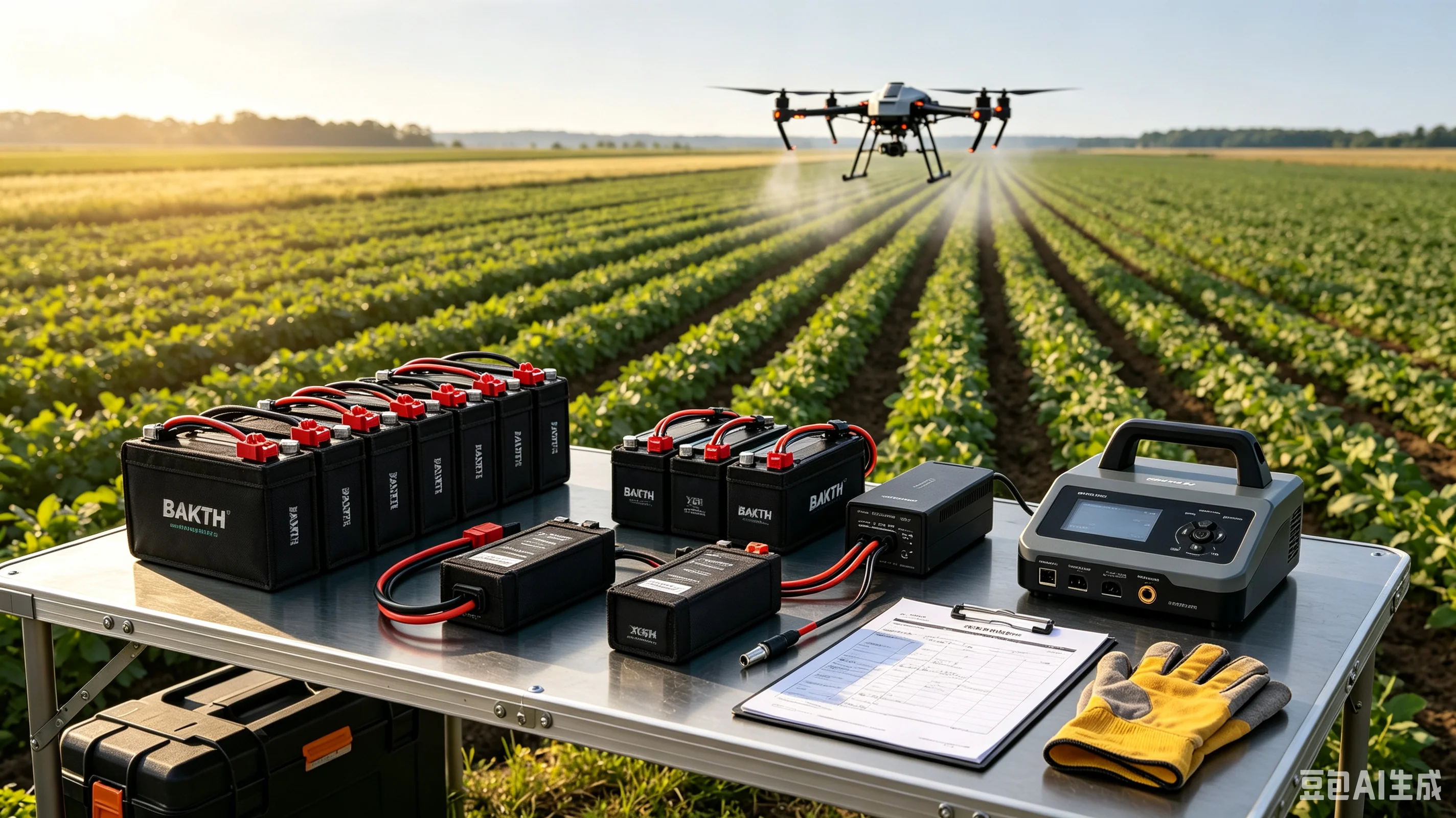
Lithium polymer and lithium-ion battery packs are the core power source for multi-rotor UAVs, covering consumer hobby drones and heavy-duty industrial models for crop spraying, topographic survey, infrastructure inspection, security surveillance and last-mile delivery. Most commercial operators and drone OEM clients face a universal pain point: the actual flight duration on site is far shorter than the official rated data.
Drones continuously consume massive power just to counteract gravity, running multiple brushless motors, high-resolution cameras, liquid spraying systems, RTK positioning modules and long-distance communication hardware simultaneously. Minor changes in load, wind speed or flight style will drastically amplify power consumption.
Many fleet operators and equipment manufacturers mistakenly attribute short endurance purely to low-quality batteries, while ignoring airframe maintenance, operation standards and environmental variables. This BAKTH industrial guide systematically breaks down all critical factors limiting drone battery runtime, delivers actionable field-tested maintenance strategies, and highlights our factory’s exclusive technical advantages to fundamentally boost flight efficiency and extend the service life of UAV battery fleets.
Main Root Causes Behind Short Drone Battery Endurance
1. Excessive Payload Weight Is the Top Endurance Killer
Every additional gram of payload raises motor thrust demand, pushing discharge current sharply higher and draining battery energy at an accelerated rate. The impact is most obvious on agricultural spraying and delivery drones:
- An empty crop UAV maintains far longer hover time than the same unit carrying full liquid pesticide tanks.
- Mounting extra sensors, high-capacity gimbal cameras or delivery cargo boxes creates sustained high-load discharge.
Practical load optimization rules:
- Only carry mission-essential equipment, remove all redundant brackets and accessories.
- Balance payload left/right and front/back to avoid constant attitude correction power waste.
- Match battery capacity and continuous discharge C-rating to your maximum payload weight during customization.
BAKTH Factory Advantage:
We offer customized high 10C–25C discharge rate drone battery packs. Compared with ordinary low-rate batteries on the market, our products support stable high-current output under full heavy payloads, avoiding severe voltage sag and sudden power drop during agricultural spraying and cargo delivery missions.
2. Wind, Temperature & Altitude Severely Reduce Battery Efficiency
Ambient conditions directly alter lithium cell output performance and motor power draw:
- Strong headwinds and frequent gusts force drones to continuously adjust RPM to stabilize position, raising power consumption by 20%–40%.
- Low temperatures below 15°C thicken electrolyte, lowering available cell capacity by 30%–50% and triggering early voltage sag.
- High temperatures above 35°C accelerate internal chemical aging, generate cell heat stress and shorten overall cycle life.
- High altitude thin air reduces propeller lift efficiency, requiring higher motor output to maintain stable flight.
Pre-flight environment preparation:
Check wind speed, ambient temperature, humidity and precipitation forecasts to adjust flight routes and reserve sufficient battery power buffer.
BAKTH Factory Advantage:
Our UAV batteries integrate built-in multi-point temperature sensing BMS and low-temperature resistant electrolyte formula. Standard models support stable discharge from -20°C to 60°C, perfectly adapting to high-temperature farm fields in summer and cold plateau survey environments, without obvious capacity attenuation under extreme climates.
3. Aggressive Flight Maneuvers Spike Instant Power Draw
Hard acceleration, steep rapid climbs, sharp banking turns and prolonged high-speed cruise create instantaneous peak current surges, far exceeding average hovering power consumption. This issue heavily impacts survey, inspection and aerial photography tasks that require stable, steady movement.
Energy-saving flight operation standards:
- Adopt slow, linear acceleration and gentle altitude adjustments.
- Minimize unnecessary hovering and repeated turning mid-mission.
- Pre-plan complete flight paths to avoid repeated backtracking and sudden course changes.
- Initiate return-to-home function while retaining at least 25% residual battery capacity.
4. Aging Lithium Packs Lead to Irreversible Capacity Attenuation
All drone lithium packs degrade gradually after repeated charge-discharge cycles. Internal resistance rises, maximum available capacity declines, and cell voltage drops rapidly under load.
Clear warning signs of end-of-life drone batteries:
- Visibly shortened single-charge flight time compared to new packs
- Obvious voltage sag under medium or heavy payload loads
- Casing bulging, abnormal heating during discharge or charging
- Slow charging speed and unbalanced voltage between series cells
- Unstable power output leading to unexpected low-power alarms
Aged batteries cannot support reliable commercial missions and must be retired promptly to avoid mid-air shutdown risks.
BAKTH Factory Advantage:
We adopt high-purity imported cell raw materials and strictly control SEI film growth through precise formula matching. After full batch cycle aging testing before delivery, our drone batteries achieve 800–1200 complete cycles with capacity retention above 80%, far exceeding the 300–500 cycle life of generic cheap UAV batteries on the market, greatly reducing the frequency of battery replacement for fleets.
5. Unregulated Charging & Storage Habits Accelerate Cell Degradation
Improved charging discipline is the most cost-effective way to extend drone battery lifespan; poor daily charging habits permanently damage internal cell structures:
- Overcharging or long-term floating at full 100% SOC triggers excessive SEI film growth and gas generation.
- Charging hot batteries immediately after flight traps residual heat inside cells, worsening thermal stress.
- Long-term storage at full charge or fully empty state speeds up self-discharge and irreversible capacity loss.
- Mismatched low-quality chargers lack precise cell balance function, causing uneven aging across series cells.
Standard charging specifications for industrial drone packs:
- Deploy only manufacturer-certified balance chargers matched to your battery cell series count.
- Allow batteries to cool to ambient temperature completely post-flight before charging.
- Never leave charging packs unattended; cut power once fully topped up.
- Store idle batteries at 40%–60% state of charge for multi-month inventory storage.
6. Worn Propellers, Motors & Airframe Components Waste Extra Power
Short flight time is not always a battery-related fault. Damaged or unmaintained drone hardware increases energy consumption indirectly:
- Bent, cracked, unbalanced propellers create aerodynamic resistance and uneven motor load.
- Dust accumulation, worn motor bearings and loose arm connectors raise mechanical friction.
- Deformed landing gear, loose wiring harnesses and misaligned gimbal brackets add unnecessary weight and drag.
Mandatory pre-flight inspection checklist:
Inspect propeller integrity, motor cleanliness, arm fasteners, wiring terminals and landing gear before every takeoff to eliminate extra power loss caused by hardware defects.
7. Mismatched Battery Specifications Fail to Meet Mission Power Demand
Blindly selecting batteries only by mAh capacity without matching discharge rate, voltage and weight will worsen endurance instead of improving it:
- Low C-rating packs cannot sustain heavy continuous discharge, leading to severe voltage sag under payload loads.
- Over-sized high-capacity batteries add excessive dead weight, offsetting any capacity gains with higher lift power demand.
- Incorrect series voltage configurations create mismatched power output for drone motor systems.
BAKTH Factory Advantage:
We provide one-stop OEM/ODM customized drone battery solutions. Our professional UAV engineering team calculates the optimal voltage, capacity, discharge C-rate and overall weight according to customers’ drone model, maximum payload, flight duration and operating environment, avoiding endurance loss caused by mismatched battery parameters.
10 Industrial-Grade Strategies to Extend Drone Battery Flight Time & Service Life
Optimizing drone battery performance relies on coordinated upgrades to flight operations, equipment maintenance, charging workflows and battery selection. Below are 10 implementable measures for commercial drone fleets:
- Draft detailed pre-flight route plans to reduce redundant flight distance and frequent attitude adjustments.
- Minimize non-essential payload weight and ensure balanced load distribution.
- Adopt smooth, stable cruising flight modes and avoid aggressive throttle manipulation.
- Reschedule missions to avoid high-wind, extreme hot or freezing weather windows.
- Clean, balance and replace damaged propellers regularly to maintain aerodynamic efficiency.
- Use only certified balance chargers compatible with your drone lithium pack chemistry.
- Follow standardized mid-state charge storage rules for batteries out of service for over 30 days.
- Strictly avoid deep discharge below 20% residual capacity during all missions.
- Record full cycle data, flight duration and charging history for each battery unit via dedicated fleet logs.
- Timely phase out aged, swollen, high-internal-resistance batteries to prevent mission interruptions.
Dedicated Battery Management Framework for Commercial Drone Fleets
Agricultural spraying, industrial inspection and logistics drone operators cannot afford unexpected battery failures during high-value field missions. Establish standardized battery asset tracking to stabilize operational efficiency:
Maintain a unified battery log book covering these core records for every pack:
- Production purchase date and factory serial number
- Accumulated total charge-discharge cycles
- Single-mission actual flight duration
- Full charging records, including charging temperature and equipment used
- Abnormal performance notes (overheating, voltage sag, bulging)
- Maintenance, replacement and retirement filing records
Regular data sorting quickly identifies degraded batteries before they trigger mid-air power faults, cutting operational downtime and long-term battery procurement costs.
Why Choose BAKTH Custom Drone Battery Packs for Your Fleet?
As a professional lithium battery manufacturer with independent R&D workshops and full automated production lines, BAKTH solves the two core pain points of drone operators — insufficient flight endurance and short battery service life — through multiple exclusive factory strengths:
- High-Rate Custom Cell Matching: We select high-energy, high-discharge original cells, supporting stable heavy-load output for agricultural spraying and delivery drones, effectively reducing voltage sag and extending single flight time.
- All-Climate Adaptive BMS Design: Independent developed multi-point temperature monitoring intelligent protection board, automatically adjusting charging and discharging thresholds under ultra-high/low temperature, preventing thermal runaway and cell aging caused by extreme weather.
- Strict Full-Batch Aging Quality Control: Every finished drone battery undergoes 48-hour continuous charge-discharge aging, voltage balance screening and high-low temperature cycling testing before delivery, ensuring consistent performance of all packs in the same batch.
- Flexible OEM & ODM Customization: Support customizable size, capacity, discharge multiplier, connector interface and communication protocol to perfectly match various industrial UAV models, no extra modification required for equipment assembly.
- Complete Global Safety Certifications: Our drone battery products pass UN38.3, CE, UL and other international transportation and safety certifications, convenient for cross-border shipping and commercial project bidding in North America, Europe and Australia.
- Long Service Cycle & Low Replacement Cost: Superior raw material and process control extend the cycle life of our batteries by nearly double compared with generic counterparts, drastically reducing fleet long-term battery procurement budgets.
Final Conclusion
Short drone flight endurance is a combined result of payload weight, meteorological conditions, pilot operation style, battery aging, irregular charging habits, neglected airframe maintenance and mismatched battery specs. Most endurance restrictions can be mitigated through standardized industrial workflows, while fundamentally improving flight time and battery stability requires selecting high-quality factory-customized UAV power packs.
Treat lithium drone packs as mission-critical core equipment instead of disposable accessories. With matched BAKTH customized drone batteries, standardized charging and storage rules, regular hardware inspections and optimized flight planning, commercial operators can significantly boost real-world flight time, extend pack cycle life and reduce overall fleet operating costs.
Contact BAKTH’s UAV battery engineering team now to get tailored power solutions for agricultural spraying, aerial mapping, infrastructure inspection and delivery UAV projects.
Frequently Asked Questions (Google PAA Optimized)
Q1: Why is my drone’s actual flight time far shorter than the official rated data?
A: Official flight time tests are completed under ideal lab conditions: zero wind, no extra payload, mild room temperature and smooth cruising flight. Field variables including load, wind, temperature and aggressive maneuvers will cut real endurance by 30%–60%. Switching to BAKTH high-rate customized drone batteries can greatly narrow this endurance gap in complex working scenarios.
Q2: How much payload weight impacts drone battery consumption?
A: Every 20% increase in total payload weight reduces flight time by roughly 18%–28%. BAKTH’s high-discharge drone packs maintain stable output under full heavy payloads, avoiding sharp runtime drops common with ordinary batteries.
Q3: Can I charge a drone battery immediately after landing from a hot flight?
A: No. Post-flight packs carry high residual internal heat; instant charging accelerates electrolyte decomposition and cell aging. Allow full cooling to ambient temperature before initiating charging, and use BAKTH matched balance chargers with temperature trigger protection.
Q4: What storage charge level maximizes drone battery lifespan during off-season downtime?
A: Maintain 40%–60% state of charge, stored in a cool, dry 15–25°C environment, and top up voltage every 2–3 months. All BAKTH drone batteries are delivered with factory preset mid-state charge for convenient long-term inventory storage.
Q5: When should commercial drone batteries be retired from mission use?
A: Retire packs once visible swelling occurs, capacity drops below 80% of original rating, cell voltage imbalance exceeds 0.1V, or abnormal overheating happens under light load discharge. BAKTH’s strict pre-delivery aging test ensures our batteries reach full cycle life without early degradation or bulging.


 Hotline
 Email
Email
 Address


 Previous