

Jul 20, 2026 |BAKTH
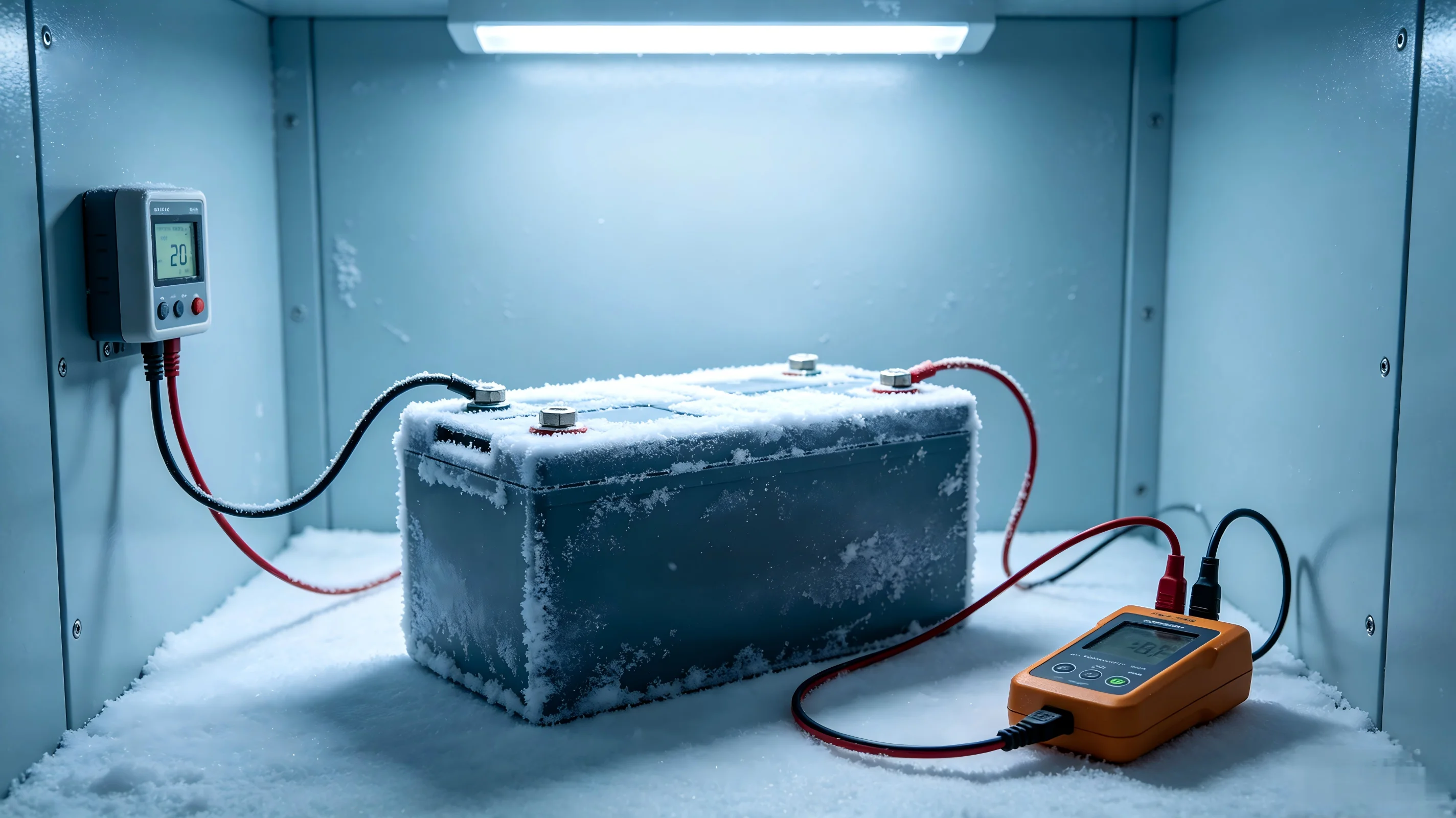
Any operator using lithium-ion or LiPo batteries in cold northern zones, high-altitude mountain areas or winter outdoor missions will encounter obvious performance degradation: shorter runtime, sudden voltage drops, weak power output and even premature equipment shutdowns. Most drone fleet managers, EV OEMs and solar installers only treat this as temporary power loss, unaware that sustained low-temperature operation brings irreversible chemical damage that permanently shortens battery service life and creates hidden safety hazards.
In this industrial technical guide, we break down the three fundamental electrochemical mechanisms that make cold weather devastating for standard lithium cells, explain the long-term safety risks of cold charging/discharging, and share practical operational guidelines. As a professional lithium battery factory, BAKTH also introduces our proprietary low-temperature battery design advantages to solve cold-climate power pain points for OEM bulk orders and commercial fleets.
All lithium battery energy delivery relies on reversible intercalation of lithium ions between cathode and graphite anode. Low ambient temperatures drastically slow down this core electrochemical process, creating competing side reactions that damage cell structures permanently.
At temperatures below 10°C, lithium ion diffusion speed inside graphite anode material drops sharply, and electrolyte ionic conductivity declines significantly. When charging under cold conditions, lithium ions cannot fully embed into graphite layers as designed. Instead, metallic lithium deposits and accumulates on the anode surface — this process is known as lithium plating.
Continuous lithium plating thickens the Solid Electrolyte Interphase (SEI) film layer by layer, consuming active lithium ions that can no longer participate in normal charge-discharge cycles. Over dozens of cold cycles, needle-like lithium dendrites grow from plated metal lithium, which may pierce the separator film between anode and cathode, triggering latent internal short circuits that can lead to thermal runaway during later high-load use.
For discharge scenarios only (no charging in cold environments), reaction speed reduction merely causes temporary power attenuation; permanent irreversible damage only occurs when charging takes place under low temperature thresholds.
Electrolyte serves as the transport medium for lithium ions, and its physical properties change drastically in cold environments: low temperature raises electrolyte viscosity and surface tension, greatly obstructing ion shuttle movement between positive and negative electrodes.
This physical change directly pushes the battery’s internal resistance to multiple times its room-temperature value, bringing two severe operational drawbacks:
BAKTH Factory Advantage: Our low-temperature series batteries adopt customized low-viscosity electrolyte formulas with special anti-freeze additives, effectively reducing electrolyte viscosity at -20°C and cutting internal resistance rise by over 40% compared to generic standard lithium cells.
Lithium ion activity inside cathode active materials weakens drastically as temperature falls, compounded by thickened electrolyte that slows ion transfer efficiency. The combined effect results in massive loss of usable discharge capacity, with the loss ratio varying based on temperature and discharge rate:
This capacity loss is partially reversible once the cell warms back to 20–25°C, but repeated deep discharge in freezing conditions accelerates electrode material fatigue and speeds up long-term capacity fading year-round. For agricultural spray drones and heavy-lift UAVs operating in northern winter fields, this means drastically shortened single-flight endurance and frequent mission interruptions.
Beyond temporary runtime reduction, prolonged cold cycling and storage trigger cumulative irreversible damage to lithium packs:
Standard consumer lithium cells are not engineered to withstand repeated cold operation. For projects deployed year-round in frigid regions, factory-customized low-temperature resistant lithium packs are a necessary investment to stabilize fleet performance and reduce frequent battery replacement costs.
As a full-process lithium battery OEM manufacturer serving global cold-climate industrial clients, we solve low-temperature battery pain points through four core proprietary design upgrades:
All BAKTH low-temperature lithium packs pass UN38.3, CE and UL safety certifications, supporting cross-border bulk procurement and commercial project deployment in Canada, Northern Europe, Russia and other frigid climate markets.
Low temperatures damage lithium-ion batteries through three core electrochemical mechanisms: slowed ion intercalation triggering lithium plating, elevated electrolyte viscosity spiking internal resistance, and drastically reduced usable discharge capacity. While cold discharge only causes temporary runtime loss, charging cells under freezing conditions creates permanent structural damage and latent safety hazards like dendrite-induced short circuits.
Standard lithium cells cannot sustain stable performance in long-term cold environment operation. Adhering to standardized winter charging, storage and flight operation rules can mitigate partial degradation, while sourcing factory-customized low-temperature resistant lithium packs fundamentally solves cold-climate power instability and extends overall battery cycle life.
If you operate drone fleets, electric machinery or solar energy storage systems in cold high-latitude or high-altitude regions, contact BAKTH’s professional UAV & industrial battery engineering team to obtain tailored wide-temperature lithium battery OEM solutions.
A: Simply discharging batteries in cold environments only brings temporary capacity loss that recovers after warming. Permanent irreversible damage mainly occurs when charging lithium packs below 0°C due to lithium plating and dendrite formation.
A: Standard drone LiPo packs lose 50%–80% rated capacity at -20°C, drastically shortening single flight endurance. BAKTH low-temperature drone batteries retain over 75% nominal capacity under the same cold conditions.
A: Not recommended. Long-term cold storage accelerates electrolyte aging and uneven cell imbalance. Store packs indoors at 15–25°C with 40–60% SOC, or select BAKTH insulated low-temperature storage customized packs for outdoor stationary equipment.
A: We adopt anti-freeze electrolyte and built-in PTC preheating BMS, allowing safe charging down to -20°C and stable discharge without severe capacity attenuation, greatly reducing fleet battery replacement costs for cold-region commercial operators.
A: Plated metallic lithium cannot re-embed into graphite anodes after formation, leading to permanent capacity loss that cannot be recovered through warming or full charge cycles.


 Hotline
 Email
Email
 Address
RM 2201, Longshenghengbo Center, Jianshe East Road and Bulong Road Intersection, Longhua District, Shenzhen, Guangdong, China
B13 Bldg, Lihe Zijing Science and Technology Innovation Center Headquarters, No. 55, Qinghu East Road, Qingxi Town, Dongguan City, Guangdong Province, P.R. China


 Previous