

Sep 24, 2026 |BAKTH
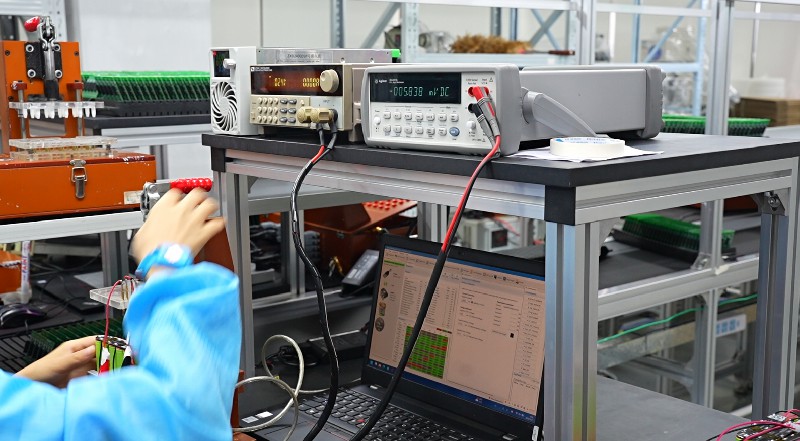
Battery swelling is a serious quality and safety concern for battery procurement buyers. For bulk purchasers, importers, OEMs, and product manufacturers, swelling can lead to product failures, warranty claims, safety concerns, and unexpected replacement costs.
Battery swelling can result from multiple factors, including cell quality, battery design, charging conditions, thermal management, mechanical stress, and manufacturing quality. This means preventing swelling should start well before the batteries arrive at the warehouse.
For B2B buyers, a reliable procurement process should include supplier qualification, cell verification, BMS evaluation, sample testing, quality inspection, and clear contractual requirements.
This article explains the main procurement risks associated with lithium battery swelling and provides practical strategies for reducing those risks.
Before improving your procurement process, it is important to understand the common factory-side and design-related factors that can contribute to lithium battery swelling.
Cell quality has a direct impact on battery pack reliability.
Poor-quality, improperly stored, counterfeit, or inconsistent cells may have manufacturing defects, inconsistent electrode characteristics, abnormal internal resistance, or other quality issues. These conditions can accelerate unwanted side reactions during charging and discharging and may contribute to gas generation and cell swelling.
Even when a cell looks normal during incoming inspection, internal defects may not be visible externally. This is why supplier quality control, cell traceability, and appropriate sample testing are important for bulk procurement.
For B2B buyers, it is important to verify the cell manufacturer, model, batch information, specifications, and quality documentation rather than relying solely on the supplier's claim that the cells are "Grade A."
The Battery Management System (BMS) is an important part of lithium battery protection.
A properly designed BMS can monitor and protect against conditions such as:
However, BMS protection depends on the quality of the hardware, firmware, sensors, wiring, and parameter settings.
A battery pack may have a normal overall voltage while individual cells or cell groups are operating outside their recommended range. Poor cell balancing or incorrect protection thresholds can increase battery stress over time.
For customized battery packs, buyers should verify the BMS architecture and protection parameters rather than checking only the nominal voltage and capacity.
Battery pack assembly quality can also affect long-term reliability.
Potential problems include:
These issues can become more serious in applications exposed to continuous vibration, impact, or movement, such as e-bikes, AGVs, robotics, and outdoor equipment.
For applications exposed to moisture, the battery enclosure and sealing design should also be evaluated. Water or moisture ingress can cause corrosion and electrical problems, particularly when the pack is not designed for the application's environmental conditions.
Cell matching is particularly important for battery packs containing multiple cells in series or parallel.
Cells with significantly different capacities, internal resistance, or voltage characteristics may behave differently during charging and discharging. Over time, this can increase cell imbalance and place additional stress on weaker cells.
A professional battery manufacturer should have appropriate procedures for cell sorting and matching based on relevant electrical characteristics.
However, buyers should also verify how the supplier performs cell matching instead of simply accepting the statement that the cells are "matched."
Before placing a bulk order, request documentation that allows you to verify the battery cells and pack specifications.
Depending on the application, useful documents may include:
If a supplier claims to use new Grade A cells, ask for documentation that supports the claim and, where appropriate, verify the cell markings, manufacturer, model, and batch information.
Avoid suppliers that cannot provide consistent product information or are unwilling to explain their cell sourcing and quality-control procedures.
Do not evaluate a BMS based only on whether the battery pack has a protection board.
For multi-cell battery packs, ask the supplier about:
For customized battery packs, BMS parameters should be matched to the selected cells, series/parallel configuration, charger, and application.
Where possible, document the agreed BMS specifications and protection requirements in the technical agreement or purchase order.
Do not approve mass production based solely on a supplier's internal test report.
Before placing a large order, evaluate pre-production samples under conditions that represent the actual application.
Depending on the product, testing may include:
The exact test conditions should be based on the battery chemistry, application, operating environment, and applicable standards.
During testing, monitor battery temperature, voltage behavior, capacity retention, BMS protection events, and physical changes to the battery housing.
For industrial and mobility applications, inspect the physical construction of the battery pack rather than focusing only on electrical specifications.
Check:
If the battery will be exposed to dust or water, verify that the enclosure provides the appropriate level of environmental protection for the application.
For example, an outdoor battery may require a different enclosure and sealing strategy from a battery used inside a controlled indoor device.
Quality requirements should be documented before mass production begins.
A B2B battery purchase agreement can define:
Clear technical requirements make it easier to determine whether a delivered batch meets the agreed specifications.
Incoming inspection can help identify obvious defects before batteries enter production or reach customers.
Depending on the product and inspection plan, buyers can check:
A swollen, damaged, leaking, or unusually hot battery should not be placed into normal production.
However, visual inspection alone cannot identify every internal battery defect. For higher-risk applications, electrical testing, sample disassembly by qualified personnel, environmental testing, or third-party laboratory testing may be appropriate.
If swollen battery packs are discovered during incoming inspection or after delivery:
Do not continue charging, discharging, or installing visibly swollen batteries.
Keep damaged batteries away from combustible materials and normal production inventory. Follow your site's battery safety procedures for temporary storage.
Provide the supplier with:
This information can help the supplier perform a root-cause investigation.
A professional supplier should investigate whether the problem may be related to:
Do not assume that every swelling problem originated in manufacturing. A proper investigation should consider the complete battery life cycle.
Damaged lithium batteries should be handled according to applicable local regulations and by qualified recycling or hazardous-material professionals.
Do not place swollen lithium batteries in ordinary household waste or standard recycling containers.
Lithium battery swelling cannot be attributed to a single cause, and no procurement process can completely eliminate every possible battery failure.
However, B2B buyers can significantly reduce the risk by building quality requirements into the procurement process from the beginning.
The key steps include:
For OEMs, importers, and industrial battery buyers, supplier quality control is not simply a purchasing issue—it is an important part of product safety, reliability, and long-term cost control.
A reliable battery supplier should be able to provide consistent cells, appropriate BMS protection, controlled pack assembly, documented testing, and traceable quality-control procedures.
Q1: What are the main supplier-side causes of lithium battery swelling?
Common contributing factors include poor or inconsistent cell quality, incorrect BMS configuration, inadequate cell matching, manufacturing defects, poor thermal or mechanical design, and improper assembly.
Battery swelling can also result from operating conditions such as excessive heat, overcharging, deep over-discharge, or mechanical damage.
Q2: Can high-quality Grade A cells still swell?
Yes. High-quality cells can still develop problems under abnormal operating conditions, excessive heat, mechanical damage, charging faults, aging, or other failure conditions.
Using high-quality cells reduces certain quality risks, but it does not guarantee that swelling can never occur.
Q3: How can I choose a reliable lithium battery supplier?
Look for suppliers that can provide clear cell traceability, consistent quality-control procedures, appropriate BMS design, sample testing, battery testing records, and transparent technical documentation.
For larger orders, consider conducting a supplier audit and evaluating pre-production samples before approving mass production.
Q4: Is pouch cell swelling more important to consider during procurement?
Pouch cells require particular attention because their flexible outer packaging can make swelling more visually apparent.
Procurement teams should evaluate cell quality, compression or mechanical design, thermal management, BMS protection, cell matching, and pack assembly processes.
However, swelling is not exclusive to pouch cells. Cylindrical and prismatic lithium-ion cells can also experience swelling or other forms of failure under certain conditions.
Q5: Should battery buyers require 100% Grade A cells?
Buyers should specify the required cell manufacturer, model, quality grade, traceability, and acceptance criteria in the purchasing agreement.
Rather than relying on the term "Grade A" alone, buyers should verify supporting documentation and supplier quality-control procedures. The term can be used inconsistently between suppliers, so objective specifications and traceability are more reliable procurement criteria.
Q6: Can a BMS completely prevent lithium battery swelling?
No. A properly designed BMS can reduce risks associated with overcharge, over-discharge, excessive current, abnormal temperature, and cell imbalance, depending on its design and functions.
However, it cannot eliminate risks caused by internal cell defects, mechanical damage, severe environmental conditions, manufacturing problems, or every possible failure mechanism.


 Hotline
 Email
 Address
RM 2201, Longshenghengbo Center, Jianshe East Road and Bulong Road Intersection, Longhua District, Shenzhen, Guangdong, China
B13 Bldg, Lihe Zijing Science and Technology Innovation Center Headquarters, No. 55, Qinghu East Road, Qingxi Town, Dongguan City, Guangdong Province, P.R. China


 Previous