

Sep 21, 2026 |BAKTH
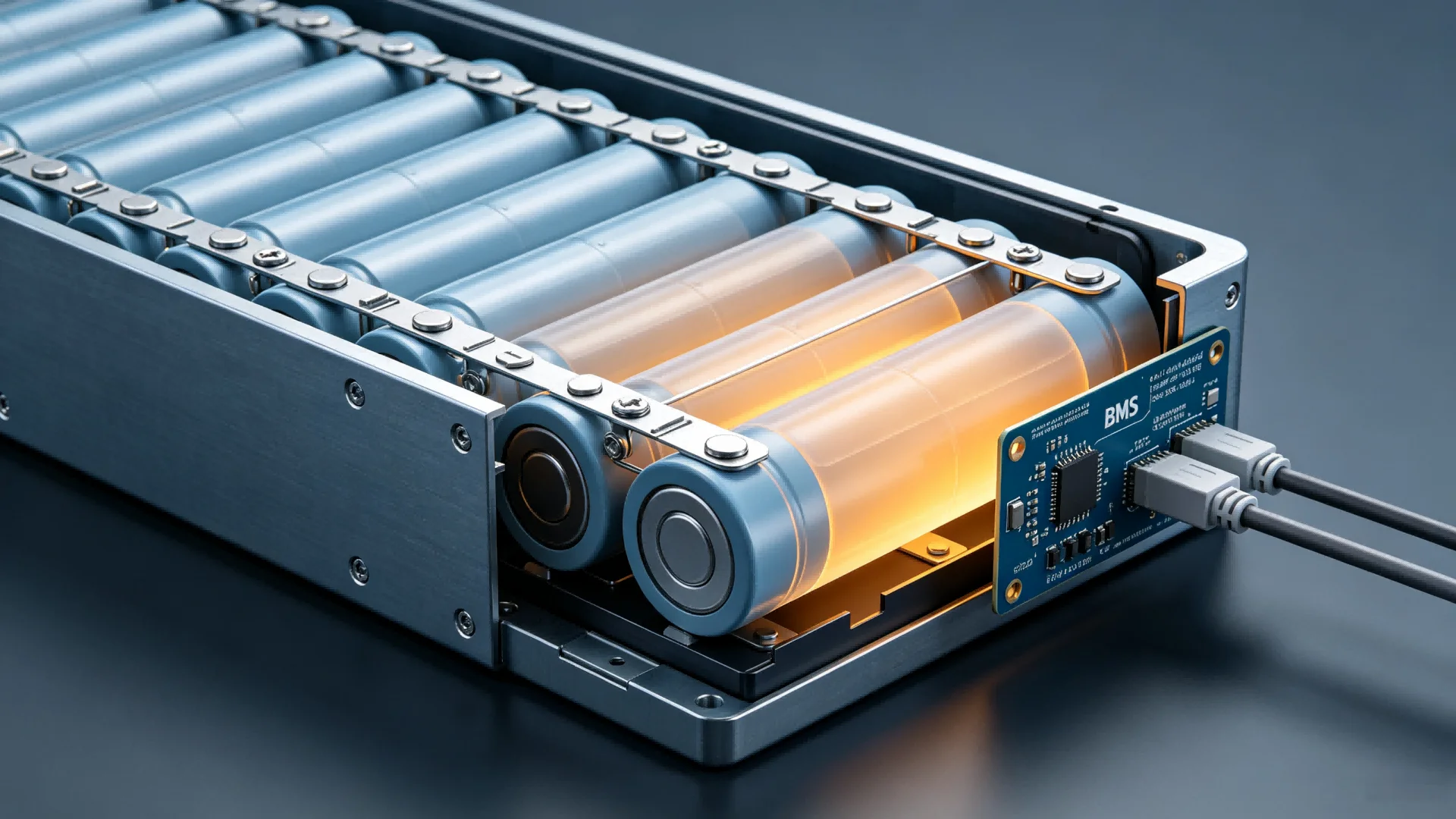
Lithium battery packs power a wide range of applications, including e‑bikes, AGVs, portable energy storage systems, and electric vehicles. As these batteries age, performance degradation becomes an important concern for equipment manufacturers, fleet operators, and battery users.
Many buyers wonder whether a degraded lithium battery pack can be repaired or restored to its original capacity.
In most cases, permanent battery aging cannot be fully reversed. However, certain pack‑level problems may be addressed through professional testing, cell balancing, or component replacement.
This guide explains the main causes of lithium battery degradation, the limitations of battery restoration, practical maintenance methods, and emerging research into battery regeneration.
Lithium battery pack degradation refers to the gradual decline in usable capacity, power output, and overall performance over time.
This degradation can occur through repeated charge and discharge cycles, prolonged storage, and exposure to unsuitable operating conditions.
Common signs include:
Unlike a single battery cell, an assembled lithium battery pack typically contains multiple cells, wiring harnesses, protective components, and a Battery Management System (BMS).
Pack‑level performance degradation can result from several factors:
When cells within a battery pack develop different performance characteristics, the weakest cell or protection limit may restrict the usable capacity of the entire pack. As a result, the battery pack may deliver shorter runtime even when some individual cells retain relatively good performance.
Several chemical and physical processes contribute to lithium‑ion battery aging. Some changes may be partially reversible under specific conditions, while others result in permanent capacity loss.
During battery operation, some lithium becomes unavailable for normal cycling because of side reactions and the formation of inactive compounds. This reduces the amount of lithium available to move between the electrodes, contributing to permanent capacity loss. The extent of active lithium loss depends on the cell chemistry, operating conditions, and aging history.
The solid electrolyte interphase (SEI) forms on the surface of the negative electrode in many lithium‑ion battery chemistries. This protective layer is essential for stable battery operation. However, continued growth or changes in the SEI layer can consume active lithium and increase internal resistance.
As resistance increases, the battery may experience:
SEI growth is one of the important mechanisms associated with lithium‑ion battery aging.
Under certain conditions, metallic lithium may deposit on the negative electrode instead of being stored normally within the electrode structure. This process is known as lithium plating.
It can occur under conditions such as low‑temperature charging, excessive charging rates, or other unsuitable operating conditions. In severe cases, lithium plating may contribute to internal short‑circuit risks and permanent cell damage.
However, lithium plating and dendrite formation are not inevitable in every aging battery. Their occurrence depends on cell chemistry, design, operating conditions, and charging behavior.
In a multi‑cell battery pack, individual cells may have different capacities, internal resistances, and self‑discharge characteristics. These differences can become more noticeable over repeated cycles and extended storage.
When cell imbalance increases:
Cell balancing can help address voltage differences, but it cannot restore capacity permanently lost through cell aging.
The following conditions may accelerate degradation:
The actual impact depends on the battery chemistry, design, and operating conditions.
Permanent lithium‑ion battery degradation generally cannot be fully reversed using conventional commercial maintenance methods.
Once a cell has experienced significant active lithium loss, electrode damage, or other irreversible chemical changes, its original capacity cannot normally be restored through standard charging or balancing.
However, not every decline in battery pack performance is caused by permanent cell aging.
1. Cell Balancing
If the primary problem is voltage imbalance between healthy cells, professional balancing may help restore some usable pack capacity. For example, one cell may reach its voltage limit earlier than the others, causing the BMS to stop charging or discharging. After appropriate testing and balancing, the pack may be able to use more of its available capacity.
However:
Balancing addresses certain pack‑level conditions, not the fundamental aging of individual cells.
2. BMS or Connection Troubleshooting
Some battery performance problems may originate from components other than the cells. Examples include:
If testing confirms that the problem is caused by a repairable electrical or control issue, correcting the fault may restore normal pack operation. This is not the same as reversing chemical battery aging.
3. Battery Reconditioning and Charging Adjustments
Certain specialized laboratory or industrial procedures are being studied to improve the performance of aged cells. However, there is currently no widely validated commercial charging method that reliably restores severely degraded lithium‑ion cells to their original capacity.
Charging adjustments should follow the cell and battery manufacturer's specifications. Unapproved charging methods may create safety risks.
Replacement may be appropriate when testing identifies:
Depending on the battery pack's design, replacement may involve individual cells, a module, or the entire pack. Any cell replacement should be performed by qualified professionals using compatible components and appropriate safety procedures.
Preventing excessive battery degradation is generally more effective than attempting to restore a severely aged battery pack. The following practices can help extend lithium battery pack service life.
Temperature has a significant impact on lithium‑ion battery aging. Avoid prolonged exposure to high temperatures, which can accelerate chemical degradation. Low temperatures can also affect battery performance and charging safety.
For daily operation, follow the manufacturer's specified temperature range rather than applying a universal temperature target to all battery chemistries. Charging lithium‑ion batteries at low temperatures requires particular attention, as unsuitable conditions may increase the risk of lithium plating.
Keeping a lithium battery at 100% SOC for extended periods may accelerate aging, especially at elevated temperatures. Repeatedly draining the battery to extremely low levels can also increase stress and over‑discharge risks.
For many applications, operating within a moderate SOC range can help reduce battery stress. A range such as 20%–80% SOC may be suitable for certain daily‑use applications, but the appropriate operating range depends on the battery chemistry, equipment requirements, and manufacturer recommendations.
A BMS helps monitor and protect lithium battery packs during charging and discharging. Depending on its design, it may provide:
A suitable BMS configuration should match the battery chemistry, cell arrangement, voltage range, and application requirements. However, a BMS cannot prevent all forms of battery aging.
High charging and discharge currents can increase battery stress and heat generation. Repeated operation at high rates may accelerate degradation, depending on the cell design and thermal management system.
For industrial battery packs, the charging and discharge current should be selected according to the manufacturer's specifications. Where fast charging is required, the battery pack should be designed to support the intended charging rate.
For long‑term storage:
For many lithium‑ion batteries, a partial SOC is suitable for storage, but the recommended range varies by chemistry and manufacturer.
Researchers are exploring new methods to improve the performance and service life of aged lithium‑ion batteries. These technologies are still being investigated, and their effectiveness depends on the type and severity of battery degradation.
Some research focuses on recovering lithium that has become inactive or improving the electrochemical activity of aged electrode materials. Certain laboratory techniques may restore limited capacity under specific conditions.
However, laboratory results should not be interpreted as proof that a commercially used lithium battery pack can be safely restored through a simple charging procedure. Performance recovery depends on the underlying aging mechanism, and results may vary considerably.
Researchers are developing new electrode materials and surface coatings designed to reduce unwanted side reactions and improve battery durability. These technologies aim to slow capacity loss and extend battery service life in future battery products. They are not equivalent to repairing an already damaged commercial battery pack.
Advanced BMS systems may use real‑time information about cell voltage, temperature, current, and battery condition to optimize charging and discharging. Adaptive charging strategies can help reduce battery stress when appropriately designed and validated. However, BMS intelligence cannot eliminate all chemical aging or reverse irreversible cell damage.
Battery regeneration research may eventually contribute to improved battery maintenance, recycling, and second‑life applications. Before these technologies become widely applicable, their safety, reliability, cost, and compatibility with different battery chemistries must be evaluated.
Myth 1: An Old Lithium Battery Pack Can Always Be Restored to Factory Capacity
Fact: Permanent chemical and structural degradation cannot normally be reversed through standard maintenance. Professional balancing or component replacement may improve performance in certain situations, but this does not guarantee restoration to the original capacity.
Myth 2: Home Battery Reconditioning Devices Can Reverse Lithium Cell Aging
Fact: Many consumer battery reconditioning devices offer limited functions, such as charging or balancing. They cannot reliably reverse the chemical aging of lithium‑ion cells. Using unsuitable equipment or attempting to bypass battery protection systems may create safety risks.
Myth 3: All Cells in a Battery Pack Age at the Same Rate
Fact: Individual cells can age at different rates due to manufacturing variation, operating conditions, temperature differences, and usage history. Over time, these differences may contribute to cell imbalance and reduce overall pack performance. A single weak cell can limit the usable capacity of a series‑connected battery pack.
Myth 4: Cell Balancing Can Restore All Lost Battery Capacity
Fact: Cell balancing can help correct certain voltage differences between cells. However, it cannot restore lithium lost through chemical aging or repair damaged electrodes. If capacity loss is caused by degraded cells, balancing alone is unlikely to provide a significant or lasting improvement.
Reliable lithium battery pack performance depends on appropriate cell selection, pack design, BMS configuration, and quality control. Manufacturers can use several strategies to help reduce premature degradation.
Before assembling a battery pack, manufacturers may evaluate cells for parameters such as:
Selecting cells with consistent characteristics can help reduce initial variation within a battery pack. However, cell matching does not eliminate aging or guarantee identical long‑term performance.
A properly designed BMS can monitor operating conditions and provide protection against: Overcharge, Over‑discharge, Overcurrent, Short circuits, Excessive temperature.
The BMS settings should be compatible with the battery chemistry and pack configuration. Protection systems help reduce the risk of damaging operating conditions, but they cannot prevent all battery degradation.
Depending on the application, manufacturers may consider:
A suitable design helps the battery pack operate within its specified limits.
Some advanced BMS systems support software updates, data monitoring, and adaptive protection functions. These capabilities may help improve battery management and identify abnormal operating conditions. However, firmware updates should only be applied when supported by the BMS manufacturer and battery pack design. They cannot restore capacity permanently lost through cell degradation.
Depending on the application, testing may include:
Testing requirements should be selected according to the battery pack's intended use and applicable standards.
Some battery suppliers provide warranty terms related to capacity retention and product performance. Warranty conditions vary by supplier, application, operating environment, and usage history. Buyers should review the actual warranty terms, including the measurement method, operating conditions, and applicable capacity thresholds.
Q1: Can I Repair a Severely Degraded Lithium Battery Pack?
It depends on the cause of the degradation. If the problem is related to a faulty connection, BMS issue, or certain replaceable components, professional repair may be possible. If the cells have experienced significant chemical degradation or physical damage, replacing the affected cells or the entire battery pack may be necessary. A qualified technician should assess the battery before determining whether repair is appropriate.
Q2: What Are the Early Warning Signs of Lithium Battery Pack Degradation?
Common signs may include: Shorter operating runtime, noticeable voltage drop under load, reduced power output, increased operating temperature, inconsistent cell voltage readings, repeated BMS protection activation. These symptoms can have multiple causes. Professional testing may be necessary to identify the underlying problem.
Q3: Does Cell Balancing Reverse Battery Aging?
No. Cell balancing helps correct certain voltage differences between cells. It does not restore active lithium lost through chemical aging or repair damaged electrodes. Balancing may improve usable pack performance in some situations, but it cannot reverse permanent cell degradation.
Q4: Which Lithium Chemistry Offers Better Long‑Term Cycle Life?
Lithium iron phosphate (LiFePO4 or LFP) batteries generally offer long cycle life and good thermal stability under suitable operating conditions. However, cycle life varies according to cell design, charging and discharge conditions, operating temperature, depth of discharge, battery management, application requirements. NMC and other lithium chemistries may offer different advantages in energy density, power performance, and application suitability. The most suitable chemistry depends on the specific battery application rather than cycle life alone.
Q5: Can Low‑Temperature Storage Stop Lithium Battery Degradation Completely?
No. Lower temperatures can slow certain chemical aging processes, but battery degradation continues over time. Extremely low temperatures may also affect battery performance and charging safety. For long‑term storage, follow the manufacturer's recommended temperature and SOC ranges.
Q6: How Can I Determine Whether a Battery Pack Needs Replacement?
A battery pack should be evaluated based on its performance, safety condition, and application requirements. Relevant indicators include: Remaining capacity, internal resistance, cell voltage consistency, physical condition, BMS performance, operating temperature, application power requirements. If the pack shows abnormal heating, swelling, physical damage, or repeated protection failures, stop using it and seek professional evaluation.
Lithium battery pack degradation is a natural process influenced by cell chemistry, operating conditions, storage, and battery management.
Permanent chemical aging generally cannot be fully reversed, but some pack‑level performance problems may be addressed through professional testing, balancing, or component replacement.
The most effective approach is to prevent premature degradation through:
For businesses developing industrial equipment, robotics, medical devices, and energy storage systems, a well‑designed battery pack can help support long‑term reliability and application performance.
Custom Lithium Battery Packs for Your Application
BAKTH Battery provides customized lithium battery pack solutions for industrial and commercial applications.
Our capabilities include:
Whether you need battery packs for AGV robots, e‑bikes, medical equipment, or portable energy systems, we can discuss your application requirements and explore a suitable battery solution.
Contact BAKTH Battery to discuss your custom lithium battery pack requirements.


 Hotline
 Email
 Address
RM 2201, Longshenghengbo Center, Jianshe East Road and Bulong Road Intersection, Longhua District, Shenzhen, Guangdong, China
B13 Bldg, Lihe Zijing Science and Technology Innovation Center Headquarters, No. 55, Qinghu East Road, Qingxi Town, Dongguan City, Guangdong Province, P.R. China


 Previous