

Aug 06, 2026 |BAKTH
High‑discharge‑rate and standard‑rate lithium‑polymer batteries deliver vastly different real‑world performance, defined mainly by C‑rating. Mis‑matching cell rating to equipment load brings voltage drops, premature aging, and safety hazards. This article breaks down their technical gaps, test behaviours, use‑case fit and critical safety notes.
The C‑rating describes the maximum safe charge or discharge current relative to a battery’s rated capacity. Simply put, 1C means a full charge or discharge completes within one hour. For example, a 5000 mAh cell at 1C supports 5 A current output.
One non‑negotiable electrochemical rule applies to all lithium‑based cells: safe maximum charge C‑rates are always lower than discharge C‑rates. During charging, lithium ions must smoothly insert into graphite anode material; this intercalation process has inherent kinetic limits that cannot be overridden.
Standard‑rate LiPo cells generally sit at 0.5C‑1C continuous discharge, built for steady, moderate‑current draw. High‑discharge‑rate cells are engineered with optimized electrode materials, higher‑porosity coatings and low‑resistance current collectors to sustain 10C‑40C continuous output under heavy loads.
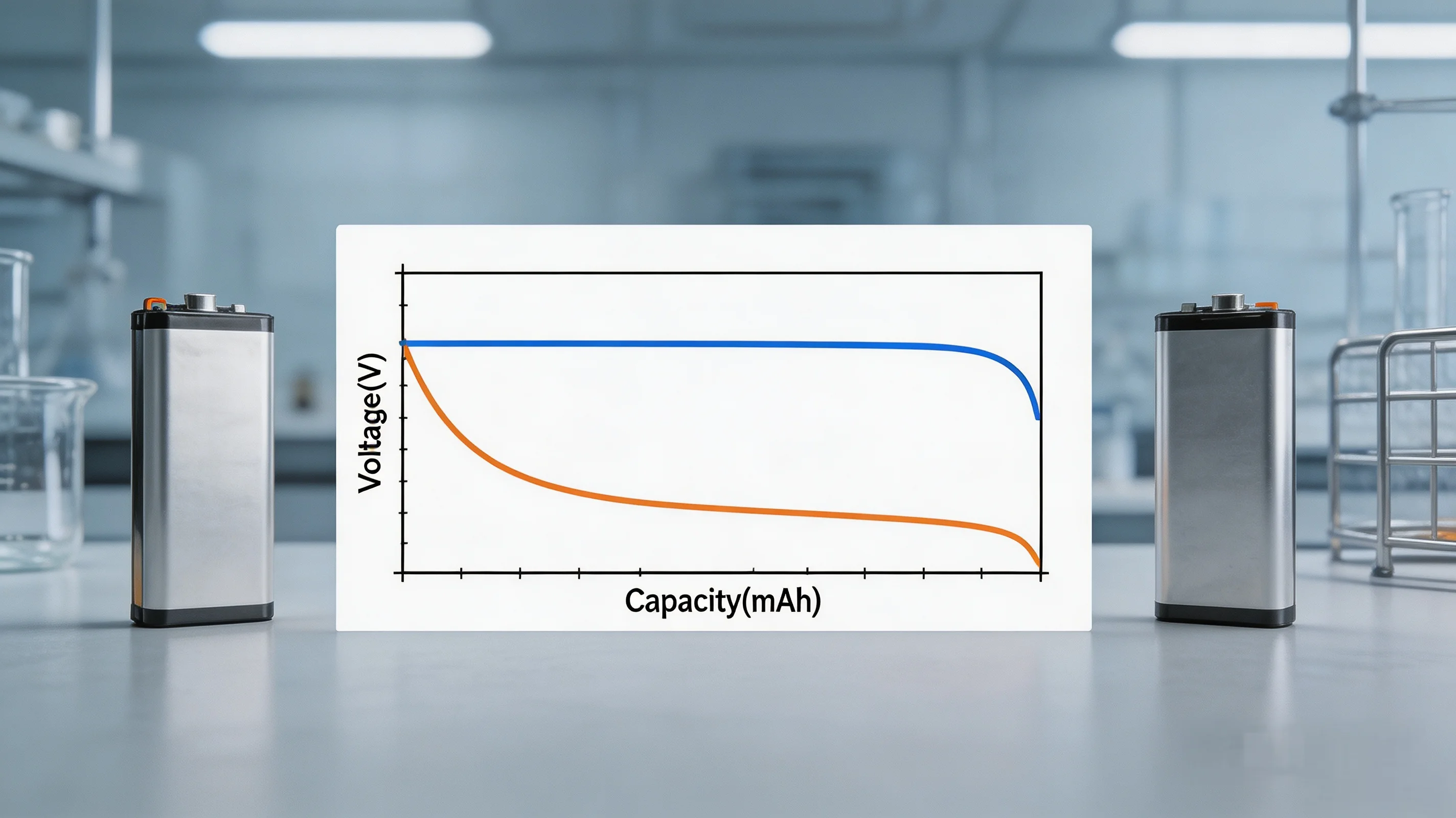
When identical‑capacity cells run extreme 40C testing, performance diverges sharply:
Voltage sag is not a sign of lower capacity; it comes from higher internal resistance and electrochemical polarization. A standard‑rate cell will fail to deliver peak power even if its mAh rating matches a high‑rate counterpart.
High‑rate cells support elevated charge rates such as 3C, finishing full charging in roughly 15 minutes. Standard‑rate batteries are designed for 1C regular charging (75‑80 minutes for full refill).
Critical Safety Warning
Never fast‑charge standard‑rate lithium‑polymer batteries beyond their datasheet charge C‑rating. Forcing high‑speed charging triggers lithium plating: metallic lithium deposits build up on graphite anode surfaces. This causes permanent irreversible capacity loss. In severe cases, growing lithium dendrites pierce the separator, bringing internal short‑circuit, overheating, smoke and fire risks.
Best suited for consumer electronics with stable, low‑to‑moderate power draw: Bluetooth speakers, handheld scanners, smart wearables and household portable gadgets. These devices never demand sudden huge current surges, so standard cells offer sufficient performance with cost advantages.
Pick high‑rate cells for hardware that requires instant large power surges:
These applications draw burst current during acceleration or peak workloads; voltage stability directly decides equipment runtime and operational safety.
Q1: Does higher C‑rating mean larger battery capacity?
A: No. C‑rating defines how fast energy can flow out, not how much total energy is stored. Two batteries can share identical mAh capacity yet hold totally different discharge‑rate specifications.
Q2: Can I install a high‑rate battery into a regular consumer device?
A: Electrically it works, but it adds unnecessary cost. Standard‑rate cells already meet low‑load requirements.
Q3: What damage occurs when I over‑stress a standard‑rate cell with high‑current load?
A: Heavy voltage sag, heavy heat accumulation, accelerated aging, swelling and potential safety risks.


 Hotline
 Email
Email
 Address
RM 2201, Longshenghengbo Center, Jianshe East Road and Bulong Road Intersection, Longhua District, Shenzhen, Guangdong, China
B13 Bldg, Lihe Zijing Science and Technology Innovation Center Headquarters, No. 55, Qinghu East Road, Qingxi Town, Dongguan City, Guangdong Province, P.R. China


 Previous