

Aug 13, 2026 |BAKTH
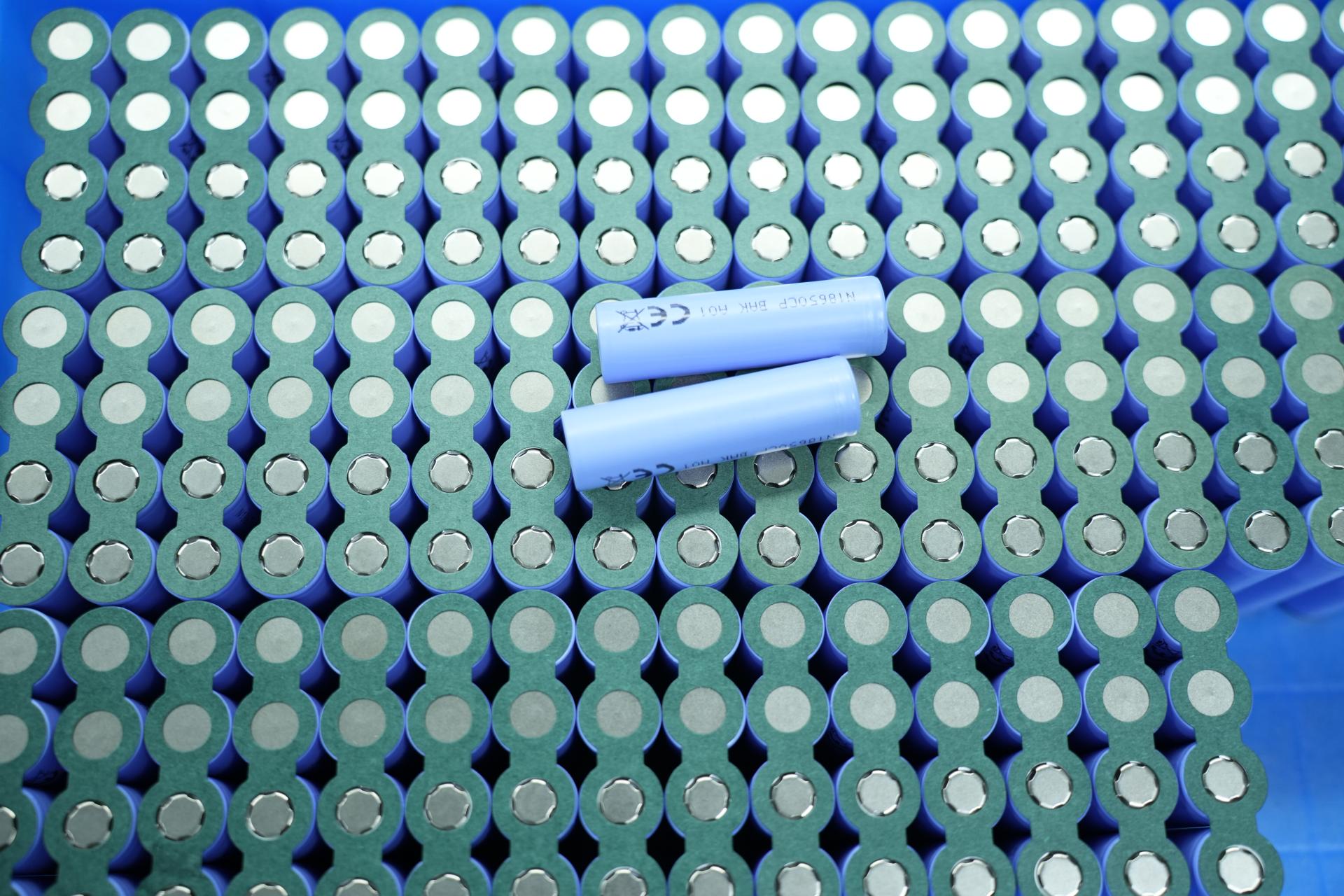
Choosing between NiMH and lithium-ion battery packs is one of the earliest critical decisions for custom power product development. Lithium delivers lightweight, high-density performance but comes with higher costs and strict safety design rules. NiMH provides an economical, low-risk power solution for moderate-load equipment. This guide breaks down technical specs, design tradeoffs and real-world use cases to simplify your battery selection.
No single battery chemistry works universally for every project. Each option aligns with distinct design priorities:
| Parameter | NiMH Battery | Lithium-Ion Battery | Unit |
|---|---|---|---|
| Single Cell Nominal Voltage | 1.2 | 3.6 | V |
| Specific Energy | 60–80 | 100–200 | Wh/kg |
| Specific Power | <200 | 100–1000 | W/kg |
| Volumetric Energy Density | 70–100 | 80–200 | kWh/m³ |
| Volumetric Power Density | 1.5–4 | 0.4–2 | MW/m³ |
| Round-Trip Charge/Discharge Efficiency | ~81 | ~99 | % |
| Typical Standard Cell Rated Capacity | 2200 | 1500 | mAh |
Cost is often the decisive factor for OEM and custom battery projects.
The most notable divergence lies in failure behaviour under abuse conditions.
NiMH cells carry minimal thermal runaway risk compared to lithium-ion. During severe overcharge or deep discharge, NiMH generates hydrogen and oxygen gas instead of flammable organic electrolyte vapour.
Lithium-ion packs require comprehensive safety architecture. Physical damage, overcharging or internal short circuits can trigger thermal runaway, smoke or fire. Multi-layer protection, thermal barriers and compliant packaging become non-negotiable design requirements.
A Battery Management System is optional, not compulsory. NiMH charging relies on constant-current control rather than fixed voltage cutoff logic, which makes accurate charge termination challenging without supporting circuits. Integrating affordable off-the-shelf BMS ICs from TI or Analog Devices prevents overcharging, extends cycle life and enables digital communication with host equipment for advanced devices.
A fully functional BMS is a mandatory safety component. It continuously monitors each cell to prevent overvoltage, undervoltage, overcurrent and short-circuit events. Without reliable BMS protection, lithium cells face irreversible degradation and severe safety risks.
Three long-term performance traits separate these two chemistries:
NiMH remains a practical solution for cost-sensitive moderate-power equipment and stationary standby power systems. When paired with a basic BMS, NiMH delivers stable long-term operation. Its mild hazard profile also simplifies global product compliance and certification for custom battery-powered devices.
Q1: What total cost difference exists between NiMH and lithium-ion packs?
A: Completed NiMH packs generally cost under half the price of equivalent lithium-ion assemblies. Engineering costs for NiMH projects are roughly 75% of lithium-ion development budgets. Lithium cells are lighter and more compact, but standard NiMH cells frequently offer higher single-unit capacity.
Q2: Do NiMH batteries suffer from high self-discharge and memory effect?
A: Yes. Conventional NiMH self-discharges roughly 1% each day and develops memory effects from repeated partial cycles. Adding an economical BMS with low-rate trickle charging helps reduce self-discharge losses and minimize capacity fade from memory behaviour.
Q3: Can NiMH packs match lithium-ion service life?
A: Uncontrolled overcharging creates crystal build-up on electrodes, reducing output voltage and cutting usable cycles. Undersized charging currents also shorten runtime. A dedicated NiMH BMS prevents overcharge and preserves cycle life. Reserve fast charging for emergency scenarios only; moderate 2–3 hour charging delivers maximum longevity.
Q4: Do NiMH enclosures need ventilation similar to lithium packs?
A: NiMH produces hydrogen and oxygen gas during overcharge or deep discharge. Housings cannot be fully sealed and must incorporate vent holes. Position battery assemblies away from heat sources and maintain airflow to lower thermal stress.
Q5: Is a BMS required for NiMH battery packs?
A: Not mandatory, yet strongly recommended. Unlike lithium-ion, NiMH cannot rely on simple voltage cutoff for safe charging. Low-cost BMS hardware avoids overcharging and noticeably extends overall battery lifespan.
Q6: What equipment works best with NiMH battery packs?
A: NiMH excels in budget-focused moderate-drain devices and stationary backup power supplies. A matched BMS stabilizes charge-discharge cycles and extends multi-year operational reliability.
Base your chemistry decision by ranking your core project priorities: budget, space/weight constraints, safety compliance standards and typical power draw.
Call to Action
Request a Quote | Custom Battery Pack Design Consultation | Download Full Technical Datasheet Comparison


 Hotline
 Email
Email
 Address
RM 2201, Longshenghengbo Center, Jianshe East Road and Bulong Road Intersection, Longhua District, Shenzhen, Guangdong, China
B13 Bldg, Lihe Zijing Science and Technology Innovation Center Headquarters, No. 55, Qinghu East Road, Qingxi Town, Dongguan City, Guangdong Province, P.R. China


 Previous