

Sep 14, 2026 |BAKTH
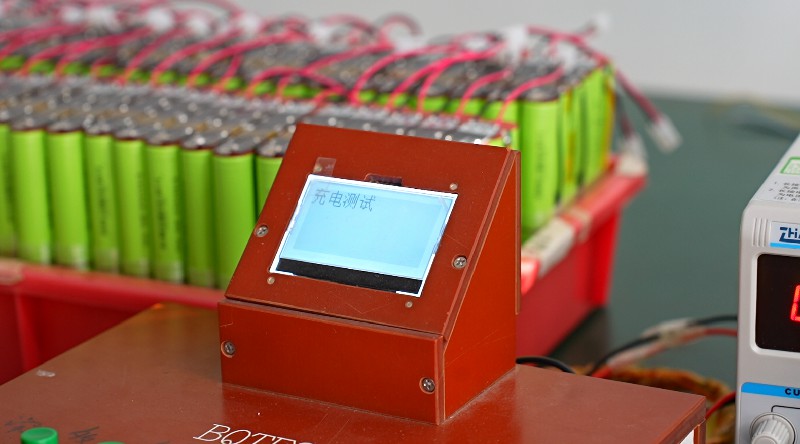
Shoppers frequently glance at mAh ratings when picking batteries for power banks, e-bikes and portable electronics. It’s easy to assume a higher capacity equals more usage time. Yet this common assumption often leads to disappointment. Rated capacity is only one piece of the puzzle. Voltage, power draw, discharge behaviour, temperature and battery quality all shape real-world runtime. This guide breaks down the hidden variables and shows how to accurately compare battery performance for your projects.
Battery capacity describes the total charge a cell can store and deliver, measured in milliampere-hours (mAh) or ampere-hours (Ah). The rating defines how much current a battery can supply over one hour under standard lab test conditions.
In simple terms, a 4000mAh battery can theoretically output 4A for one hour, or 1A for four hours. But this theoretical benchmark rarely matches real-world performance, because capacity testing happens under controlled, low-stress lab environments that differ from daily use.
This is the biggest mistake buyers make when comparing batteries. mAh only measures charge, not total energy. To calculate real stored energy, you need to include voltage:
Watt-hours (Wh) = Voltage (V) × Ampere-hours (Ah)
Take two batteries with identical 5000mAh ratings:
- Li-ion cell: 3.7V, 5000mAh = 18.5Wh
- NiMH cell: 1.2V, 5000mAh = 6Wh
Same mAh number, but the lithium-ion battery holds more than triple the usable energy. Comparing batteries purely by mAh is misleading without checking voltage.
Real operating time follows this basic rule:
Runtime = Total Battery Energy (Wh) ÷ Device Power Draw (W)
Two key variables control your runtime: how much energy the battery holds, and how fast your equipment consumes power. Even if you upgrade to a higher-capacity battery, runtime will not improve if your device’s power demand rises proportionally.
Two devices running off the same battery can deliver vastly different usage times. If Device X pulls 1W and Device Y pulls 10W, Device Y drains the same battery ten times faster.
High-power gear such as RC motors, portable heaters or high-brightness spotlights will exhaust batteries quickly, even with high mAh ratings. Low-power hardware like wireless sensors uses minimal energy and can run for years on small-capacity batteries.
Manufacturer capacity ratings use a low discharge current. When you draw high current (high C-rate), internal resistance inside the battery creates voltage drop and heat. This cuts down the usable capacity.
A battery marked 3000mAh might deliver close to full capacity at low loads, yet only 2600mAh under heavy continuous discharge. For high-current applications like jump starters and drone packs, the C-rate rating matters nearly as much as capacity.
Extreme temperatures alter battery chemistry. Cold environments slow internal chemical reactions, lowering voltage and available capacity. A battery that performs well at room temperature can lose significant usable energy in freezing weather.
High heat may temporarily boost output but speeds up degradation, shortening the battery’s overall service life. Outdoor solar storage and remote field devices must account for temperature swings when sizing batteries.
No battery stays at its original rated capacity forever. After repeated charge cycles, internal resistance climbs and usable capacity slowly fades.
A brand-new 5000mAh battery may drop to roughly 4200mAh after hundreds of cycles. Aged high-capacity batteries may even run shorter than a newer, smaller-capacity cell. SOH (State of Health) should be reviewed alongside rated capacity for used battery packs.
Some high-capacity cell designs use thicker electrodes and extra active material to boost mAh figures. This can raise internal resistance. Under heavy loads, more energy turns into waste heat instead of powering your device. The gain from extra capacity gets partially lost to thermal inefficiency.
Device design often overrides battery size. Two smartphones illustrate this point:
- Phone 1: 4000mAh, low-power chipset and optimized firmware
- Phone 2: 5000mAh, power-hungry processor and unoptimized software
Phone 1 can easily achieve longer runtime despite its smaller battery. Energy-efficient electronics often create bigger gains than simply upsizing battery capacity.
Budget battery brands advertise eye-catching mAh values to attract buyers. These numbers may reflect theoretical capacity instead of real usable output. This practice is widespread among cheap power banks and no-name rechargeable packs. Always verify Wh values rather than trusting mAh marketing claims alone.
Even batteries sharing matching mAh and voltage specs can perform differently in the field:
Upgrading capacity reliably extends runtime only when all other variables remain unchanged:
Even then, gains are rarely linear. A 20% capacity upgrade may deliver less than 20% extra runtime due to heat and resistance losses.
Skip comparing mAh alone and use these criteria for battery selection:
A GPS tracker draws an average of 10mA at 3V.
- Battery A: 1000mAh
- Battery B: 2000mAh
Under ideal conditions, Battery B delivers nearly double the runtime. If Battery B suffers high self-discharge or poor cold-temperature performance, the real runtime improvement shrinks noticeably.
Myth #1: Larger mAh guarantees longer runtime
Fact: Voltage, power consumption and discharge performance all affect usable energy.
Myth #2: Higher capacity batteries are always the best pick
Fact: Larger batteries add weight, cost and extended charging time. Optimising device efficiency may be a smarter solution.
Myth #3: Batteries with matching capacity ratings offer equal performance
Fact: Cell chemistry, manufacturing quality and balancing create major performance gaps.
Battery capacity is a useful specification, but it is not the sole predictor of runtime. A higher mAh rating represents potential extra stored charge, yet real-world operating time hinges on total energy in watt-hours, device power draw, discharge behaviour, temperature, battery age and system efficiency.
For accurate comparisons, always evaluate Wh rather than just mAh. When designing or purchasing battery-powered systems, balance proper battery sizing with efficient device design to hit your target runtime without unnecessary extra weight or expense.
Tags: lithium battery, NiMH battery, battery capacity, watt hours, portable power, battery runtime
Q: What is the best metric to compare battery energy?
A: Watt-hours (Wh) is the most reliable metric, combining voltage and capacity to show total stored energy.
Q: Can a lower mAh battery last longer than a higher mAh option?
A: Yes, if its voltage is higher, or the device’s power consumption drops significantly.
Q: Does cold weather reduce battery runtime?
A: Cold temperatures slow chemical reactions inside cells, cutting available capacity and shortening runtime.
Q: Is mAh completely useless as a specification?
A: No. mAh helps evaluate charge capacity when comparing batteries with identical voltage and chemistry.


 Hotline
 Email
 Address
RM 2201, Longshenghengbo Center, Jianshe East Road and Bulong Road Intersection, Longhua District, Shenzhen, Guangdong, China
B13 Bldg, Lihe Zijing Science and Technology Innovation Center Headquarters, No. 55, Qinghu East Road, Qingxi Town, Dongguan City, Guangdong Province, P.R. China


 Previous